
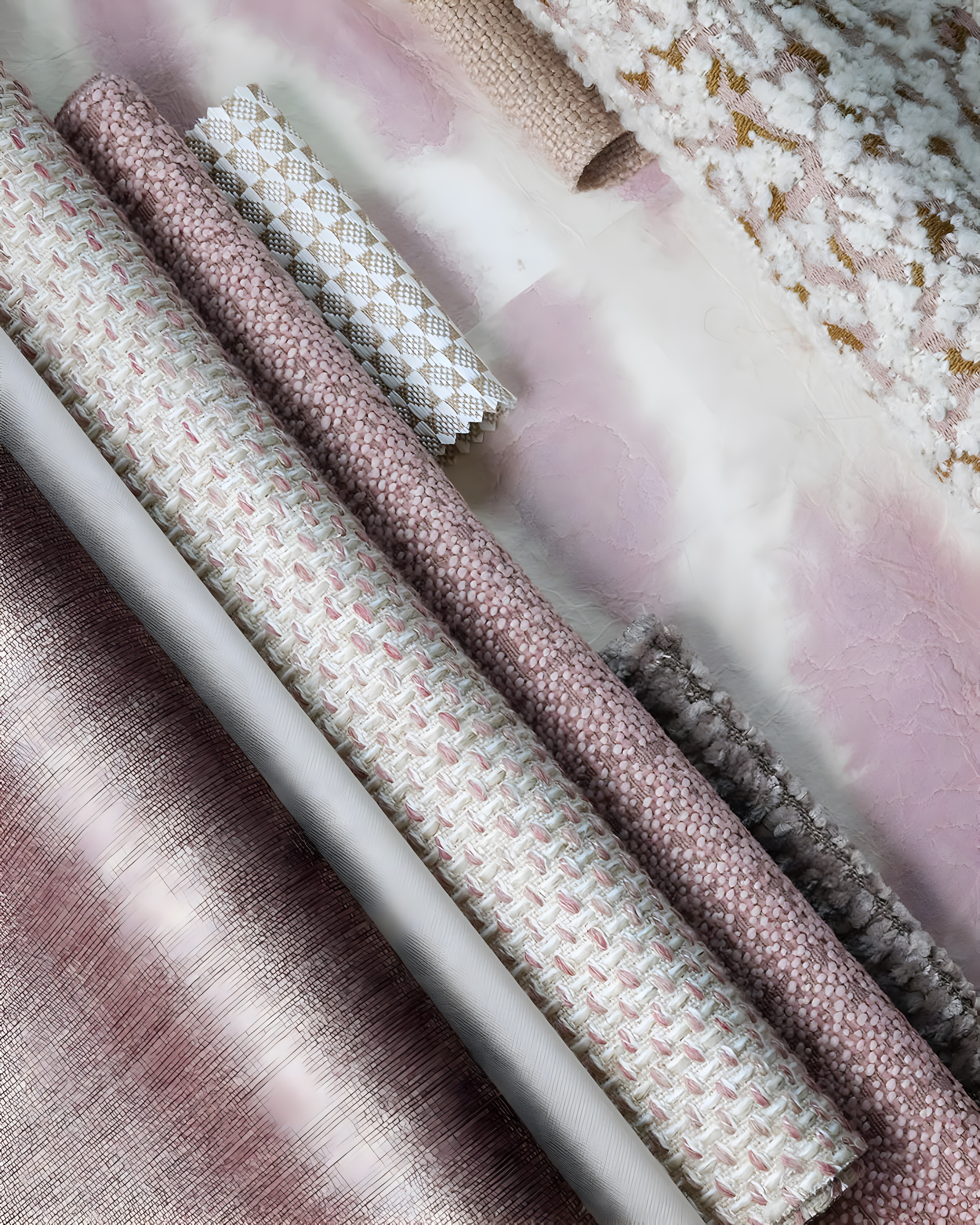
Ori
Linen, raffia, abaca, sisal and paper yarn, woven by hand and by specialist mills.
Around ninety-nine percent of the wallcoverings used in Japan are vinyl or other plastics. Ori is woven from natural fibre instead.
A few metres in a day
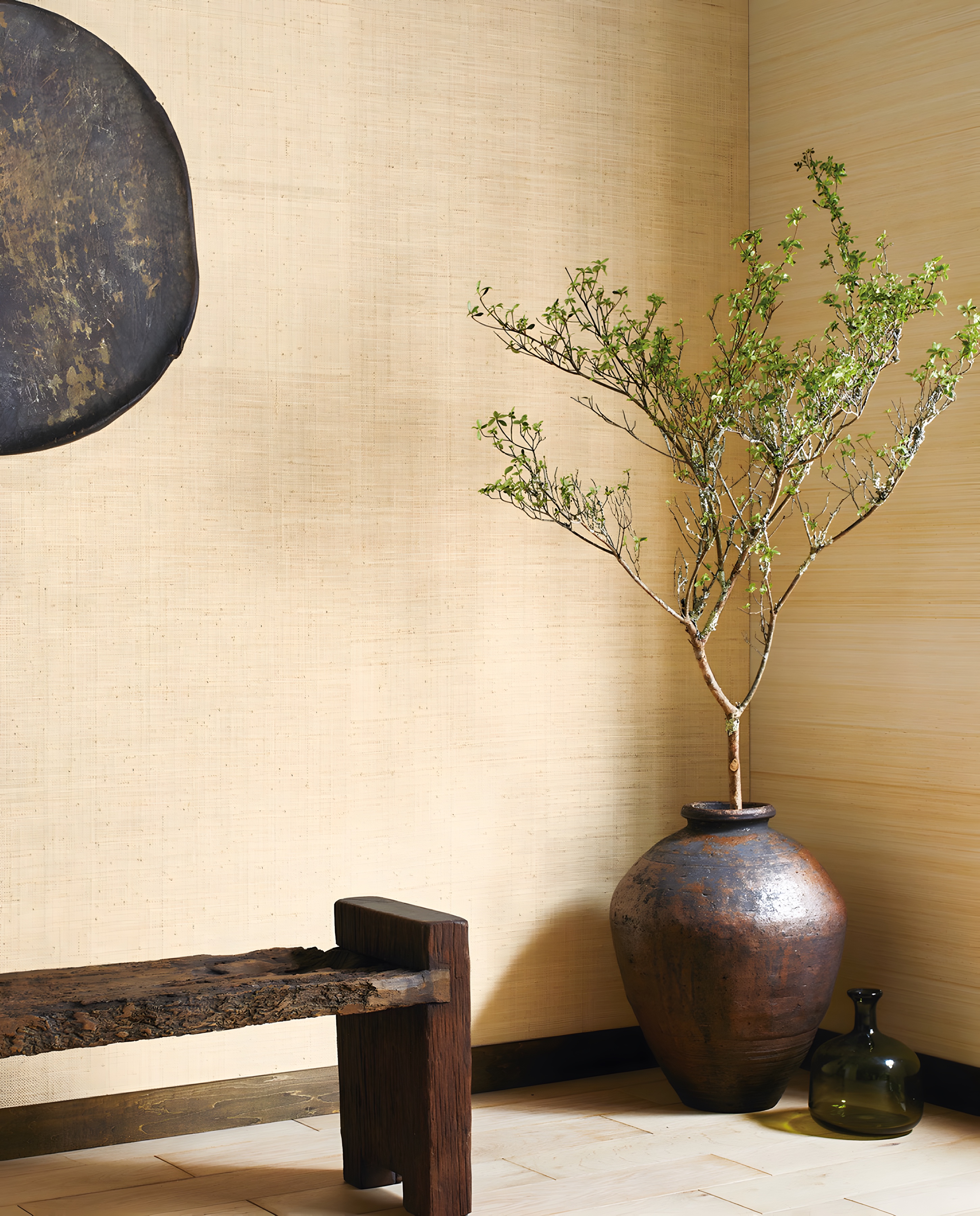
Two of the weaves are made entirely by hand in the Philippines. In one, raw silk so fine that only skilled weavers can handle it is woven with thread made by hand from abaca, the Manila hemp, in a district known for its traditional dress. Two to three metres are woven in a day.
In the other, leaves of the raffia palm are split by hand into thread, joined by hand and hand-woven, three to five metres in a day. Raffia is the supple fibre used for summer hats.
Natural fibre is short and uneven, so knots, bands of colour and changes of texture appear along a roll. That is the character of the material.
Kyoto linen and the looms of Tango
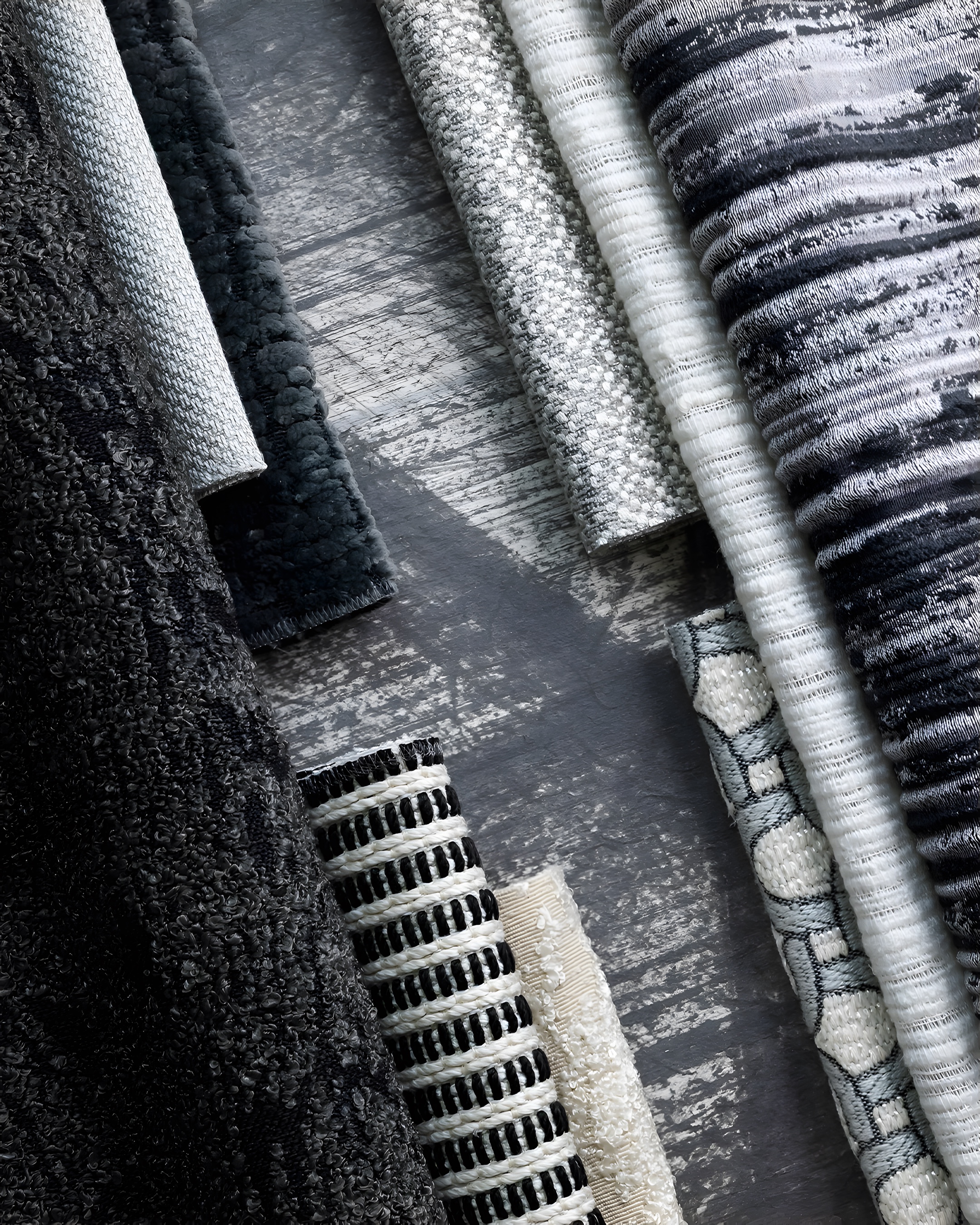
Linen from France, Belgium and Bangladesh is woven at a specialist linen mill in Kyoto and carefully finished. Some is dyed by a special method to a natural tone; one is woven in herringbone.
In the Tango district of Kyoto, traditional weaving techniques combine the finest-count warp with recycled cotton and linen yarns, for a natural and delicate surface.
Elsewhere more than 1,200 warp threads of linen, rayon or polyester, every bobbin set by hand, are laid side by side and laminated to a paper base, showing the thread exactly as it is.
How Ori is made
Hand-woven in the Philippines
Fibre taken from plants and woven just as it is: abaca with raw silk, and raffia palm split and joined by hand. A weaver completes only a few metres in a day.
Paper yarn
Shifu: cloth woven from twisted paper thread, with a texture and depth of its own, laminated to silver metallic or dark paper.
Warp-laid
More than 1,200 warp threads of linen, rayon or polyester, every bobbin set by hand, laid side by side to show the thread exactly as it is.
Woven in Japan
Linen from France, Belgium and Bangladesh, woven at a specialist linen mill in Kyoto; and the traditional techniques of Tango, using the finest-count warp with recycled cotton and linen.
Ori on the wall
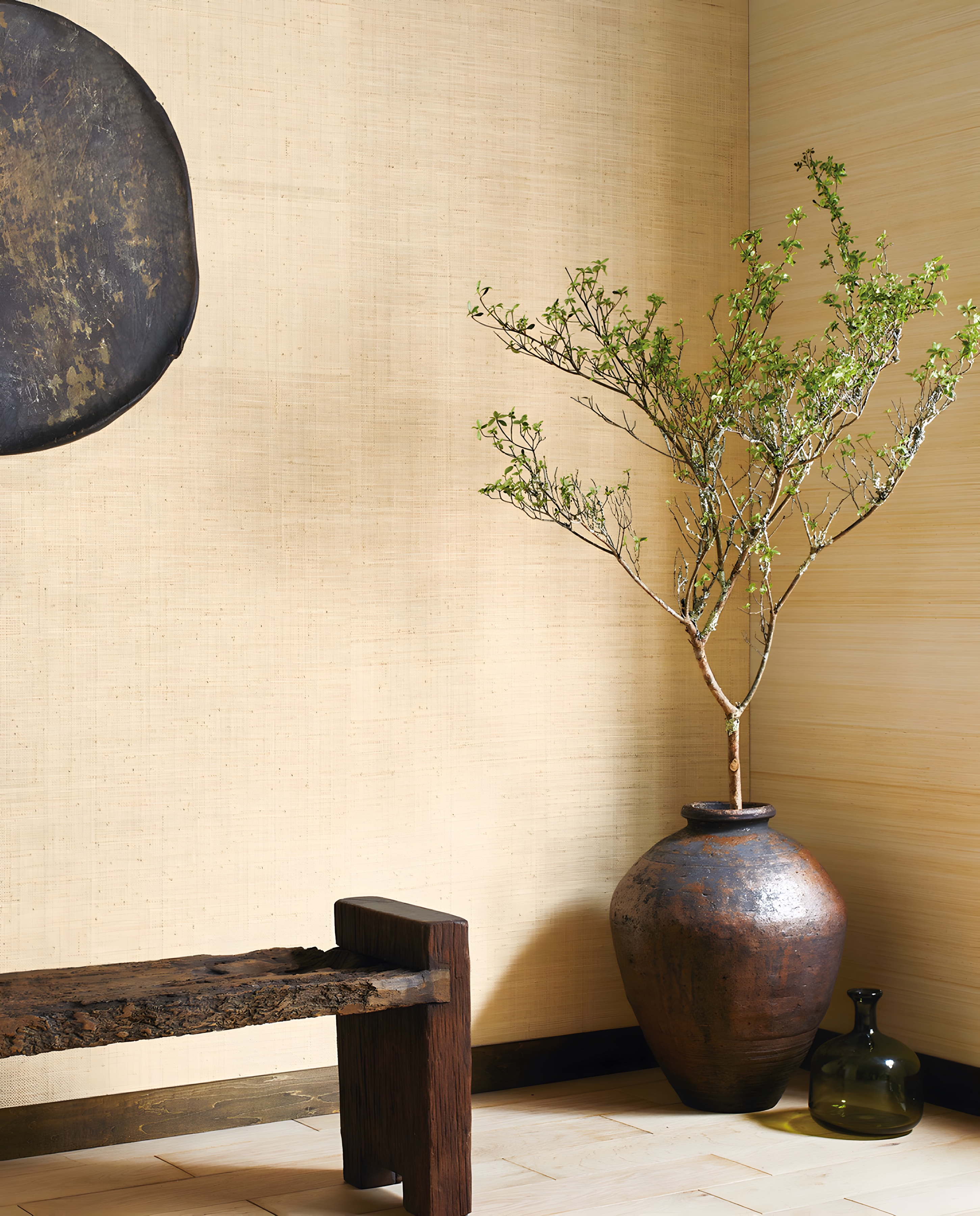
Raw silk in the warp; in the weft, a thread made by hand from abaca, the Manila hemp. Hand-woven in a district of the Philippines known for its traditional dress. The silk is so fine that only skilled weavers can handle it, and just two to three metres are woven in a day. Abaca fibre is about two metres long and is knotted into thread by hand, so colour and thickness vary; the silk gives the cloth a beautiful lustre. Water-repellent finish.
A traditional handcraft of the Philippines. Leaves of the raffia palm are split by hand into thread, joined by hand and hand-woven, three to five metres in a day. Raffia is the supple natural fibre used for summer hats. With raffia in both warp and weft, and fibres only about a metre long, knots are many, and colour and texture change visibly along a roll. That is the character of the material. Water-repellent finish.
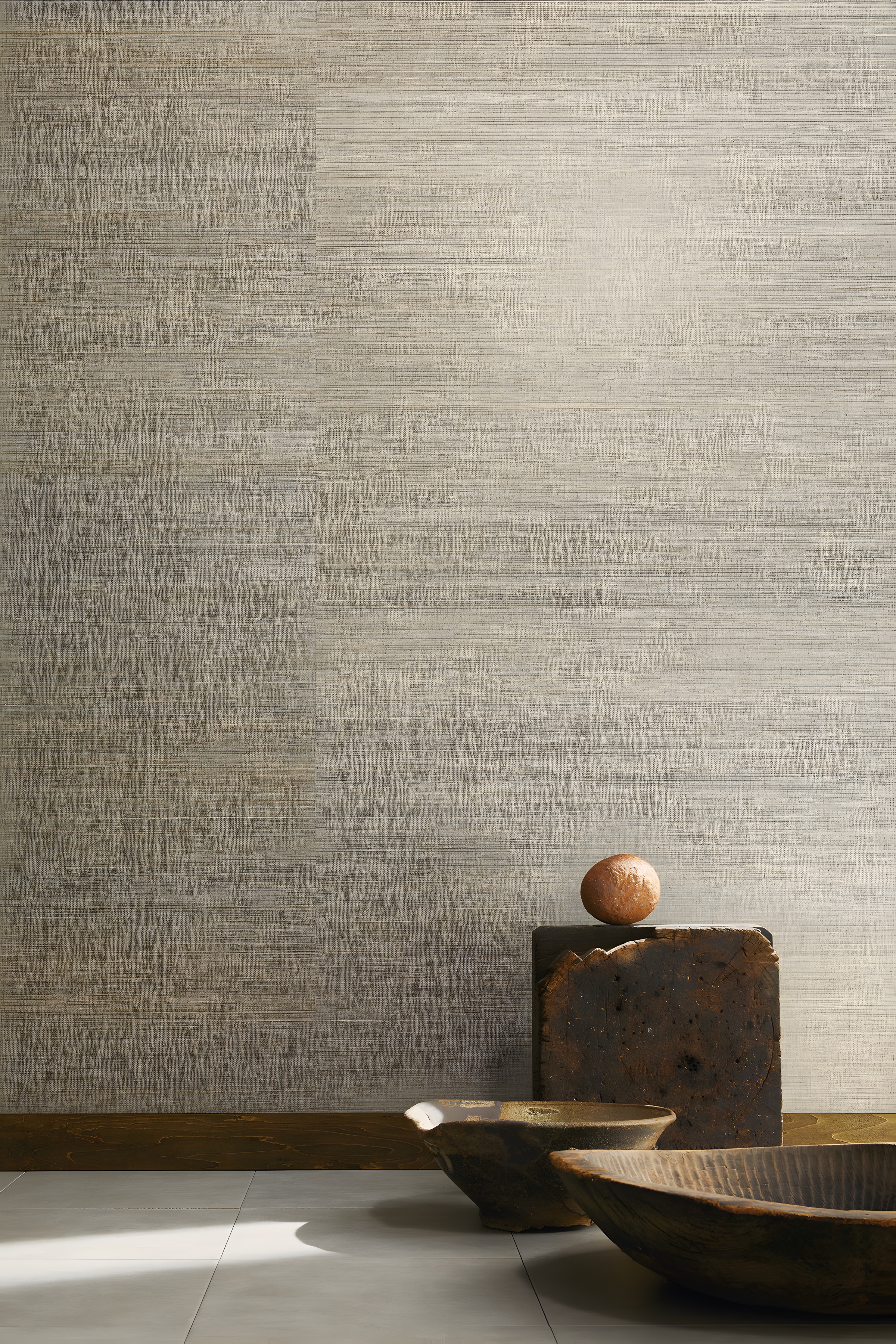
A weave with abaca, the Manila hemp, in the weft. As a natural material its colour and thickness are uneven, and horizontal bands may show clearly. TRI-5507 is coloured on the surface with water-based pigment.
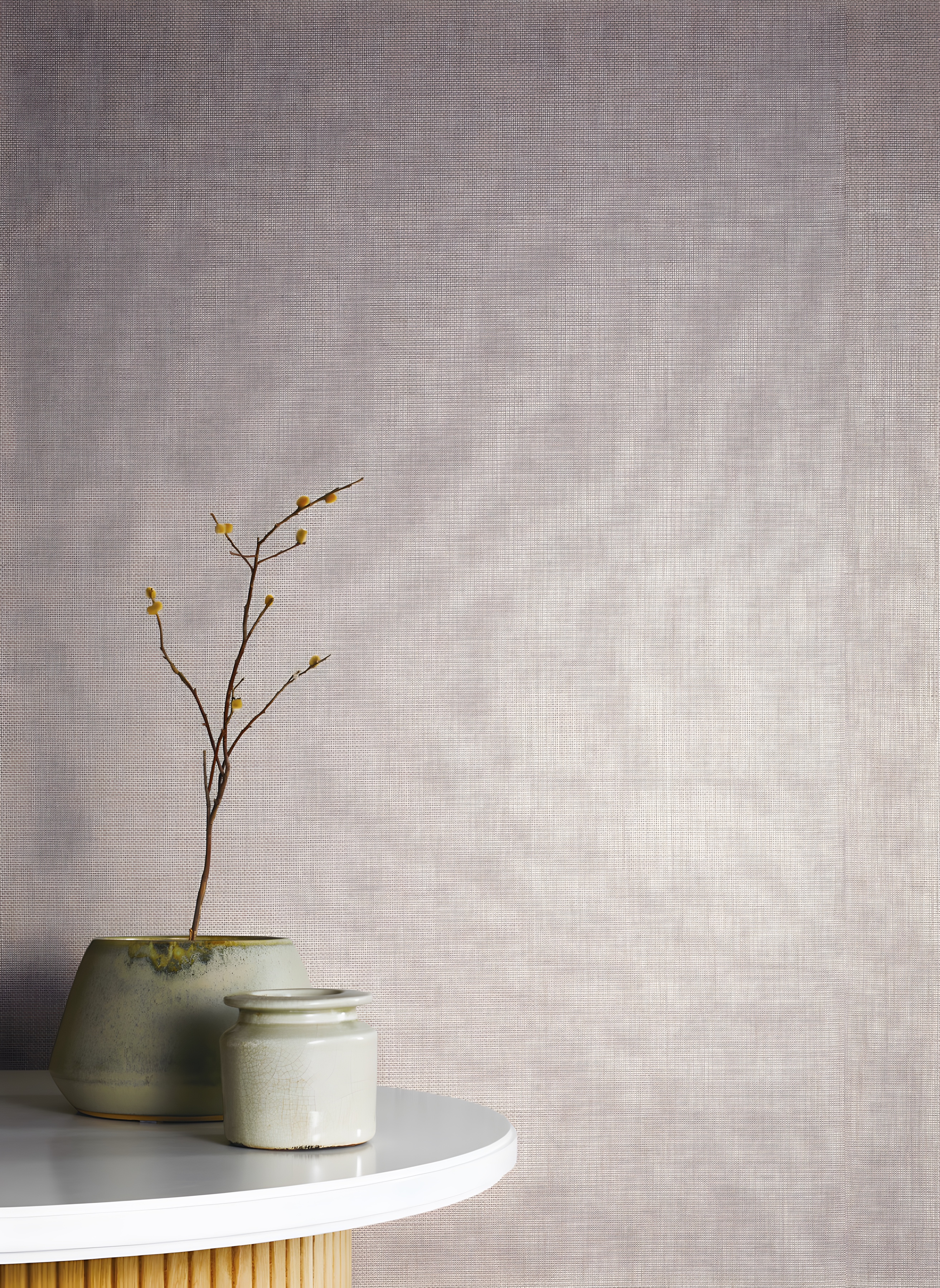
A weave of paper yarn in both warp and weft, laminated to silver metallic paper and coloured with water-based pigment. The uneven colour and relief of the twisted paper give it a distinctive texture and depth.
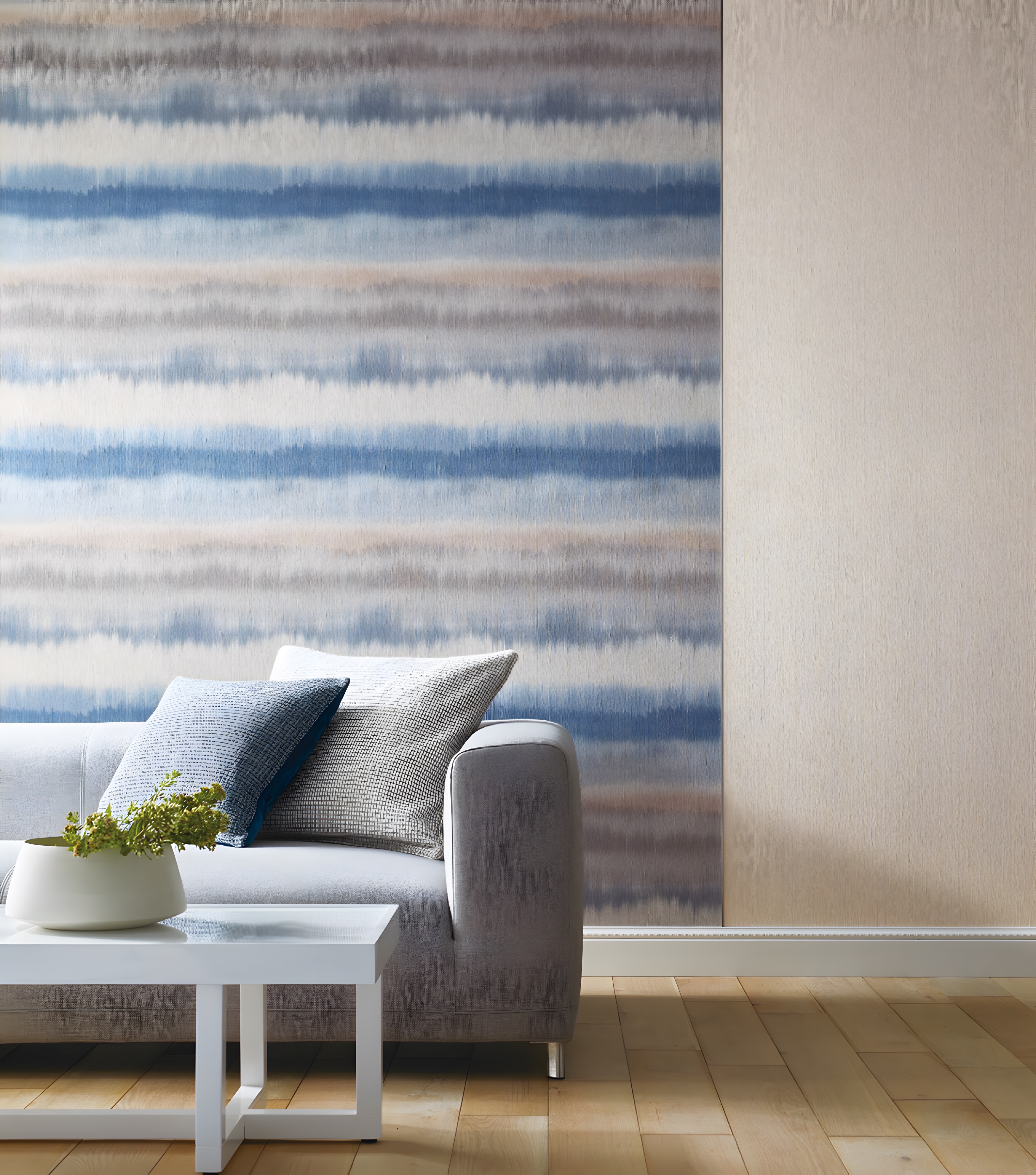
A warp-laid wallcovering: more than 1,200 warp threads laminated to a backing, coloured to bring out the quality of linen. The knots and slubs particular to linen give it relief and catch the light softly.
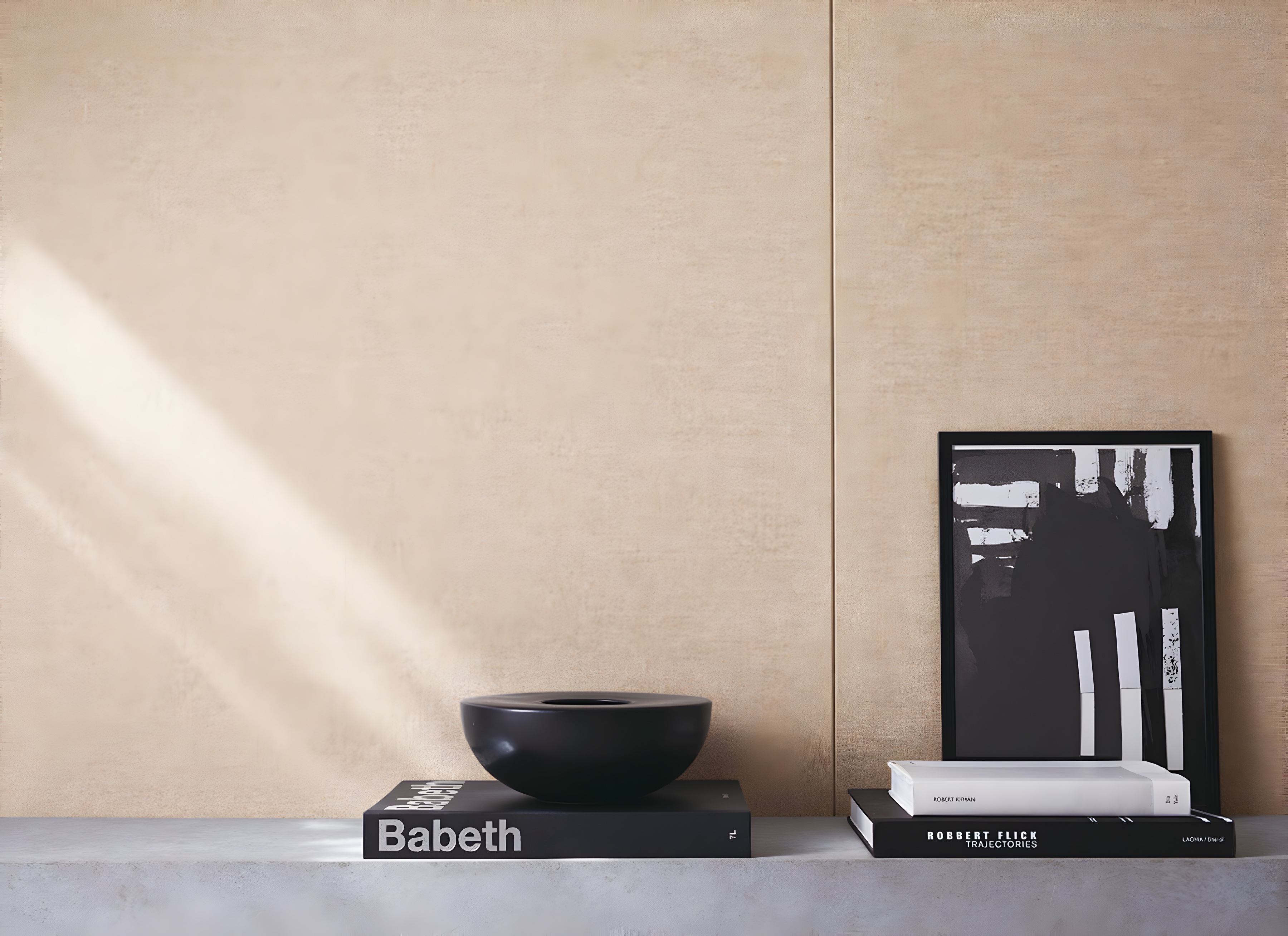
Linen from France, Belgium and Bangladesh in both warp and weft, woven at a specialist linen mill in Kyoto.
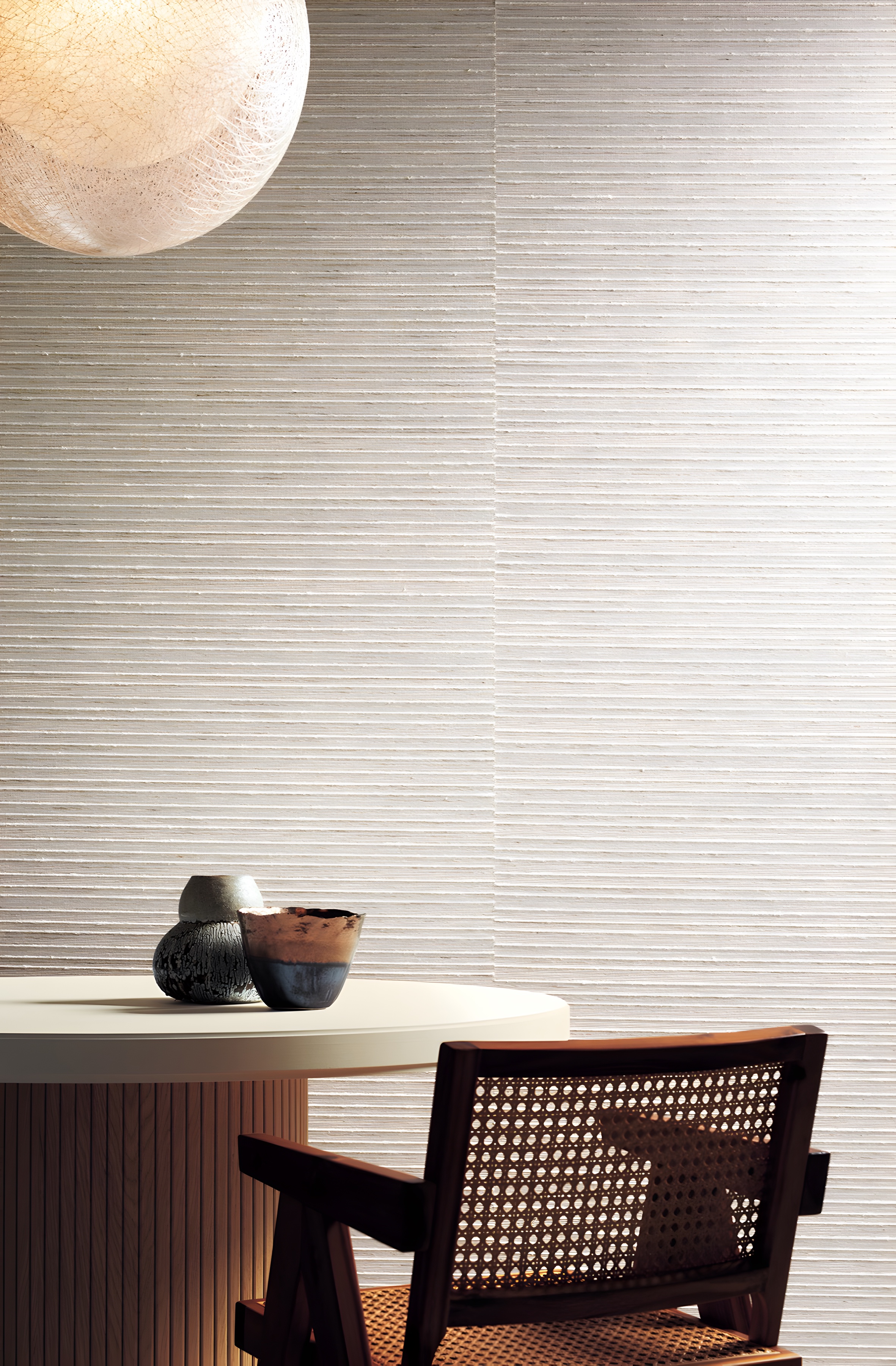
A thick blended yarn of cotton and other fibres, with paper yarn and linen in the weft, giving real relief. Hung at random, the horizontal bands become the design and no two walls are alike.
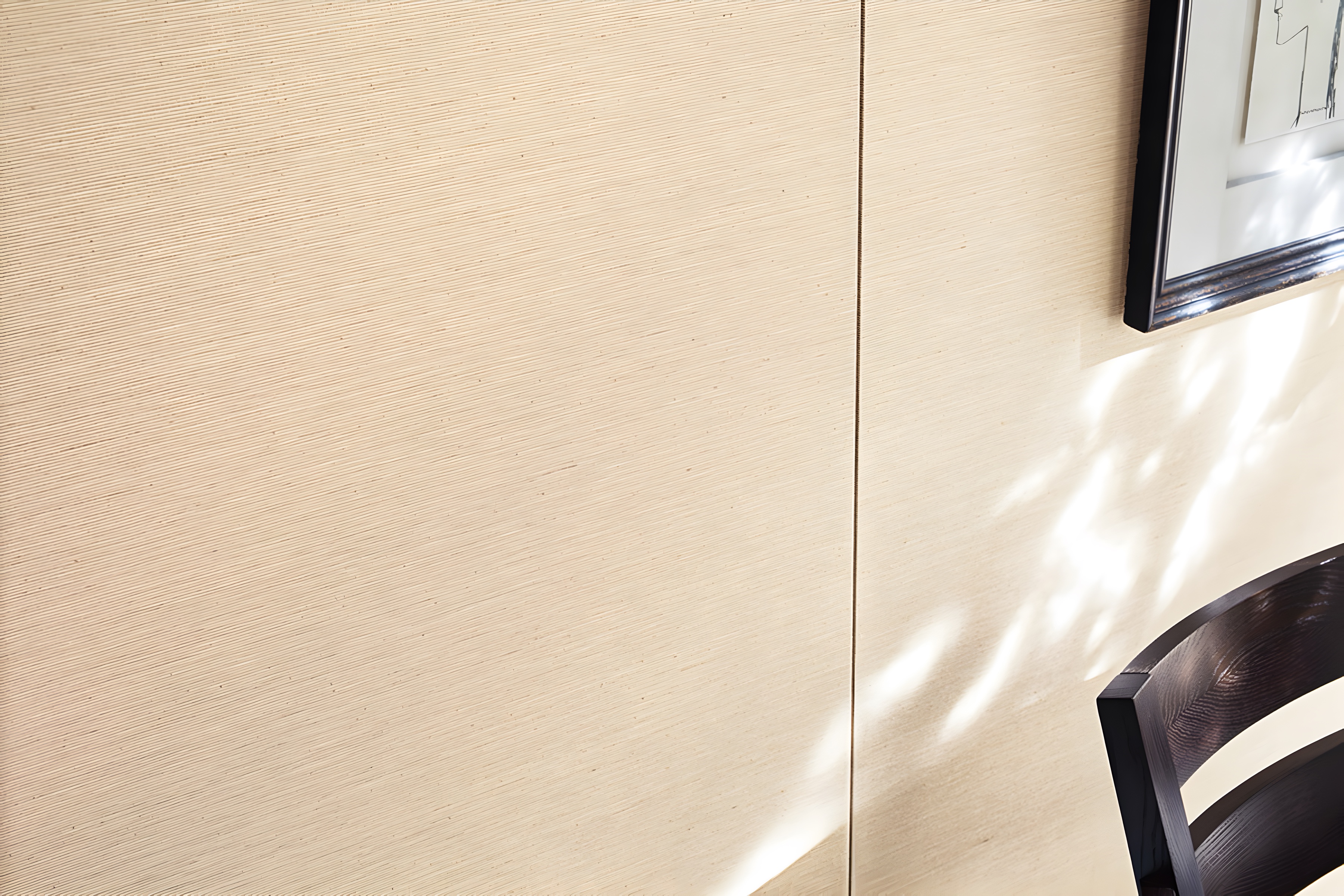
The finest-count warp, woven with the traditional techniques of the Tango district of Kyoto, with recycled cotton and linen alternating in the weft. Natural and delicate.