
Kozo
Washi, the paper of the mulberry: 1,300 years of craft, made in Inshu, Tottori.
Of the fibres used for washi, kozo is the thickest, the longest and the strongest, and it resists fading in the sun. It is the fibre that lets paper become a wall.
Thirteen hundred years of paper
Papermaking techniques reached Japan from China in the early seventh century, and kozo was soon cultivated across the country. Two hundred years later Japan had a method of its own, nagashizuki, and the techniques of washi have been shaped ever since by the climate and by the wisdom of those who practised them.
Kozo is made in Inshu, in Tottori, where that history is still kept in the local archives. The design Aoya is named for one of the towns where Inshu washi was born.
Washi is made from three bast fibres: kozo, mitsumata and gampi. Kozo has long covered fusuma and umbrellas, and has even been woven into paper cloth for clothing, which is why it suits the wall so well.
Cut in winter, grown again by spring
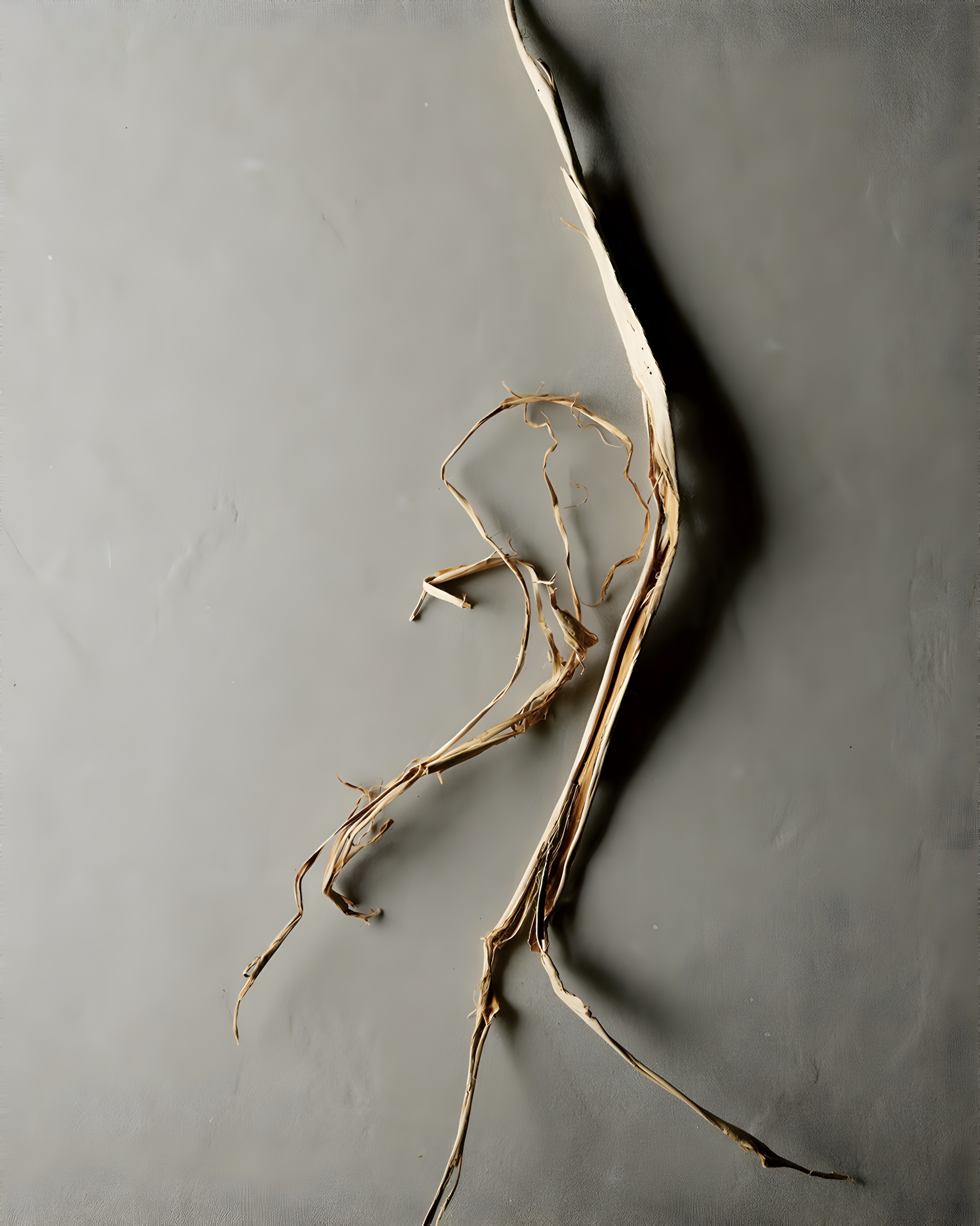
A mature kozo plant stands over three metres tall. It is harvested each year in early winter, once its leaves have fallen, and grows back the following year, so it can be cultivated continuously without harming the land.
Washi uses no adhesive. The sheet is held together only by its own fibres: as the water leaves, the cellulose fibres bond to one another.
Tomita launched Kozo in 1988 as Japan’s first washi wallcovering collection. In 2025 its sixth volume, Kozo VI, won the Grand Prix at JCD Product of the Year.
How Kozo is made
The kozo
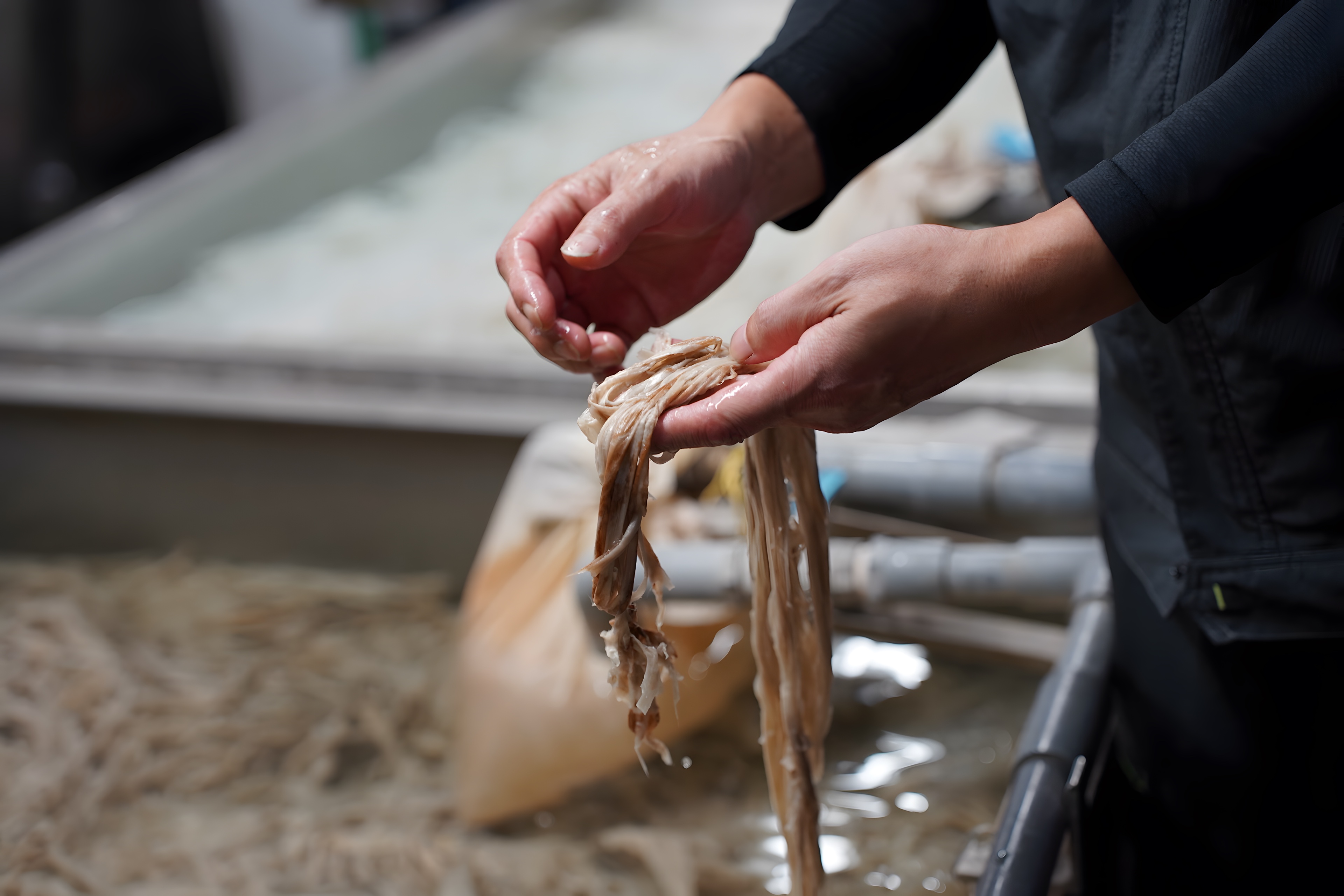
A mature plant stands over three metres and is harvested every year without harm to the land. The branches are steamed in a great pot and, while still warm, stripped of their bark by hand, one by one. The dark outer layer is removed, and the white inner bast is dried.
Cleaning the fibre
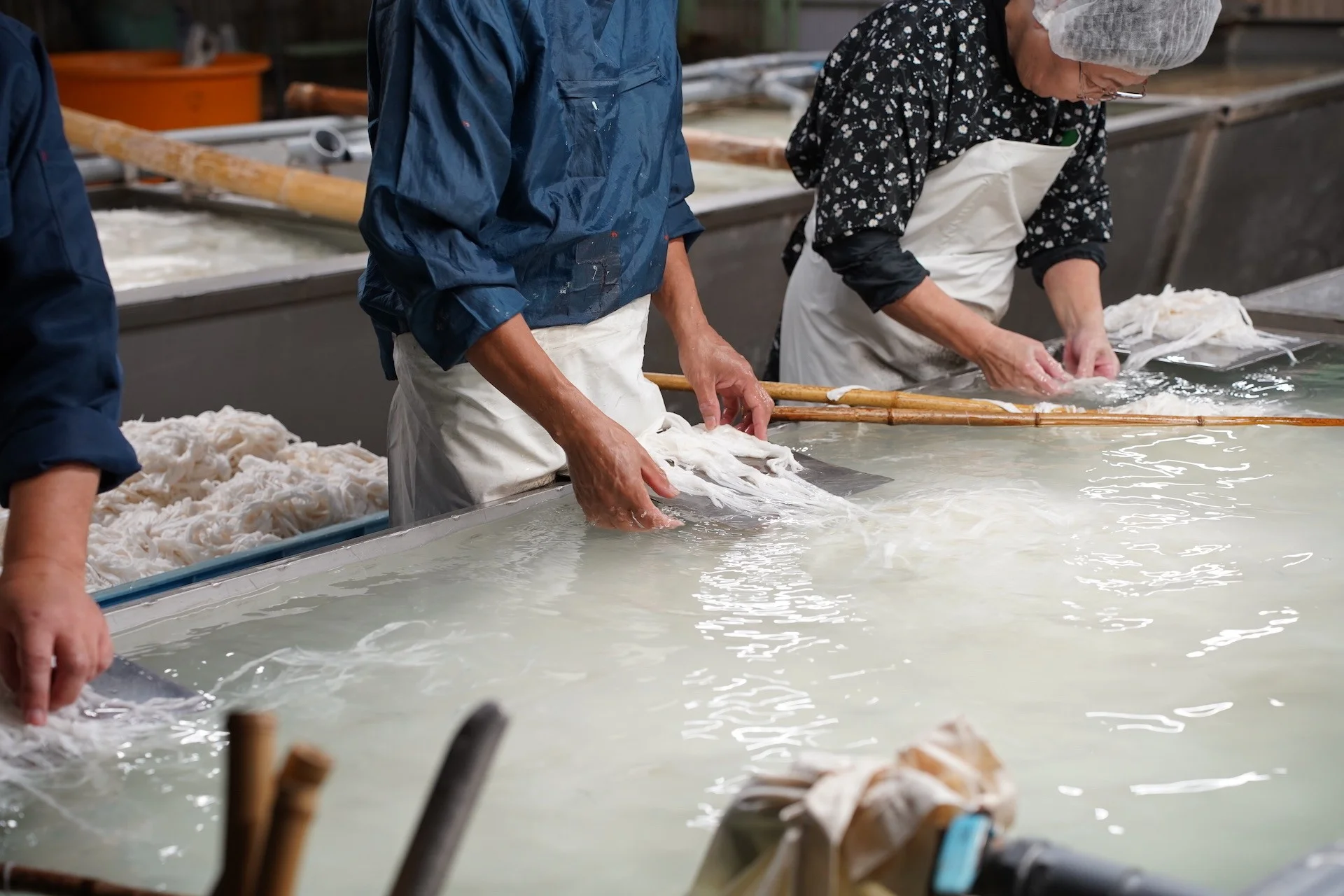
The white bark is soaked and boiled until soft. Then, in cold water, artisans pick out every last speck of black bark and dust by hand, before the fibre is beaten into finer strands.
Forming the sheet
The fibres are dispersed evenly in water with a viscous liquid that lets them float and entwine. Washi uses no adhesive: as the water leaves, the cellulose fibres bond to one another.
Colour
Colour is applied by machine or by hand. Either way it answers to the state of the paper, the temperature and the humidity, and getting it right takes time and years of experience.
Painting
For hand-worked designs, artisans crease and fold each sheet to order, then lay on pigment with brushes, one sheet at a time. It cannot be done without a trained eye.
Drying
Each sheet dries naturally in the air. Slow drying keeps the hues and the soft bleeding that belong to washi. It is then bonded to a backing paper, and becomes a Kozo wallcovering.
Techniques you will find in the collection
Brushwork
Pigment is laid on with broad brushes, a sheet at a time. For Asagiri, two artisans move their brushes across the sheet at the same moment.
Shibori
Sheets are gathered and dyed, in the manner of sekka shibori, so that no two patterns are the same. In Art Wall Legend the paper is wrapped into a cylinder and dyed.
Momi
Each sheet is crumpled by hand, revealing the strength of the fibre. The creases diffuse light softly and hold the pigment in deeper tones.
Folding and creasing
Sheets are folded or creased by hand into geometry, as in Shikigawara and Senkoku, before colour is applied.
Kira
A shimmering finish made from mica, brushed on in thin layers or drawn in streaks across the sheet.
Formed into the sheet
Natural materials such as soil, hemp, or the black bark of the kozo itself are formed into the paper as it is made.
Kozo on the wall
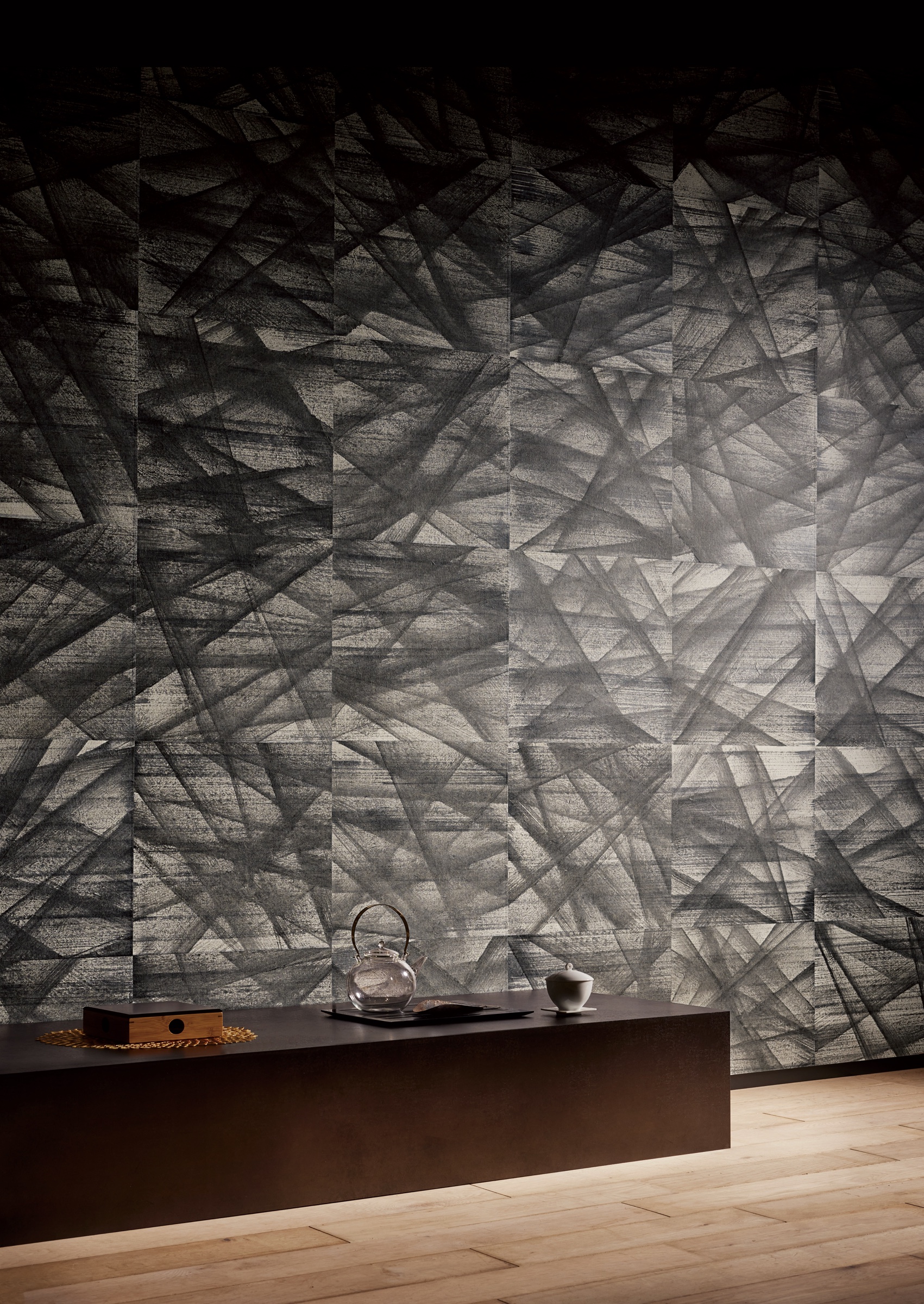
Light passing through clear glass, its rays seeming to cross one another. Artisans draw every sheet by hand, and the layered brush lines give a room a modern edge and real depth. Each wall is assembled from hand-painted 46 cm squares of washi, so no two are quite alike.
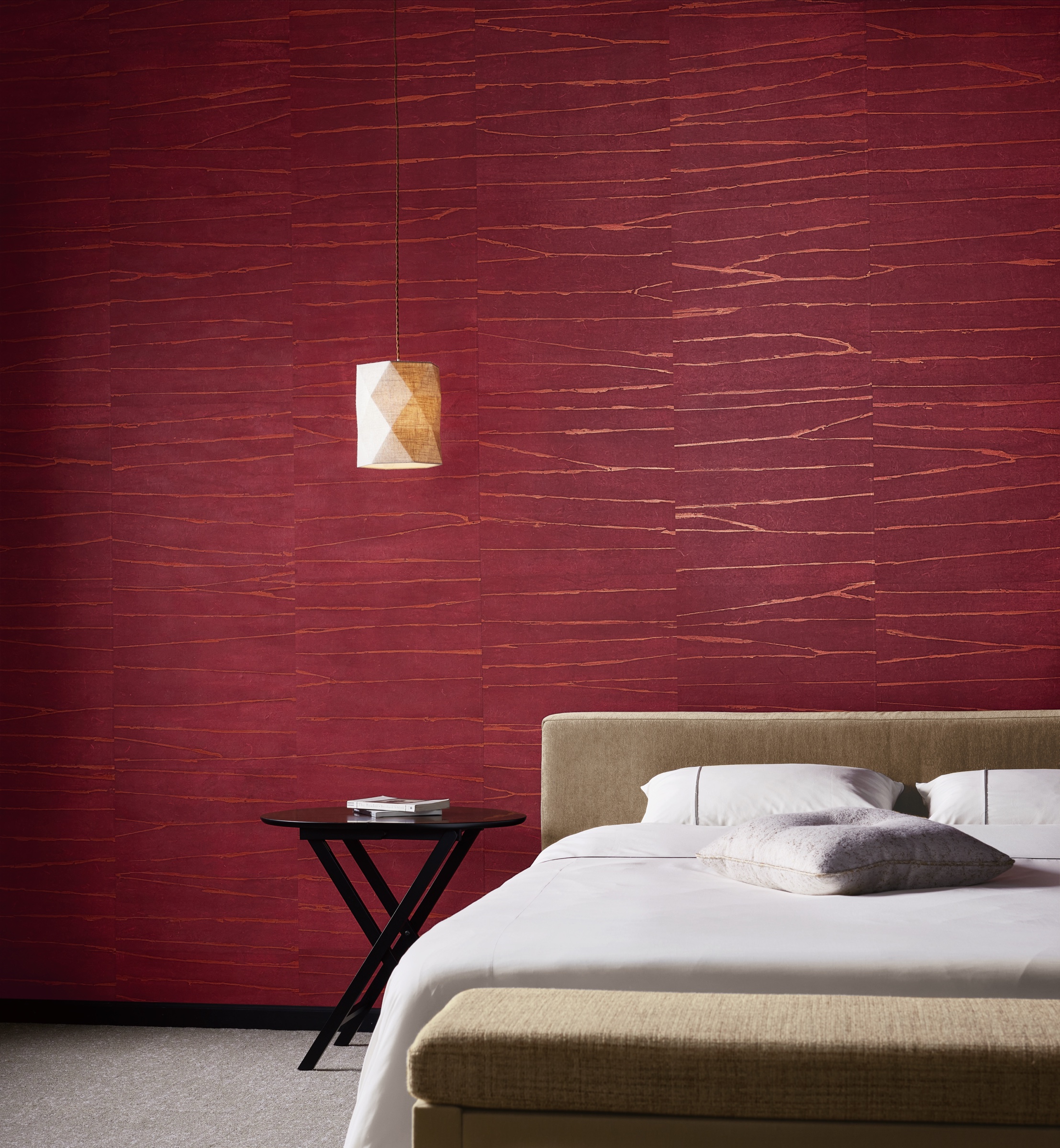
The moon in the night sky, reflected on water rippling in the breeze. Faintly shimmering lines suggest the mirrored moon and melt into a deep ground, bringing stillness and a quiet sense of depth to the room.
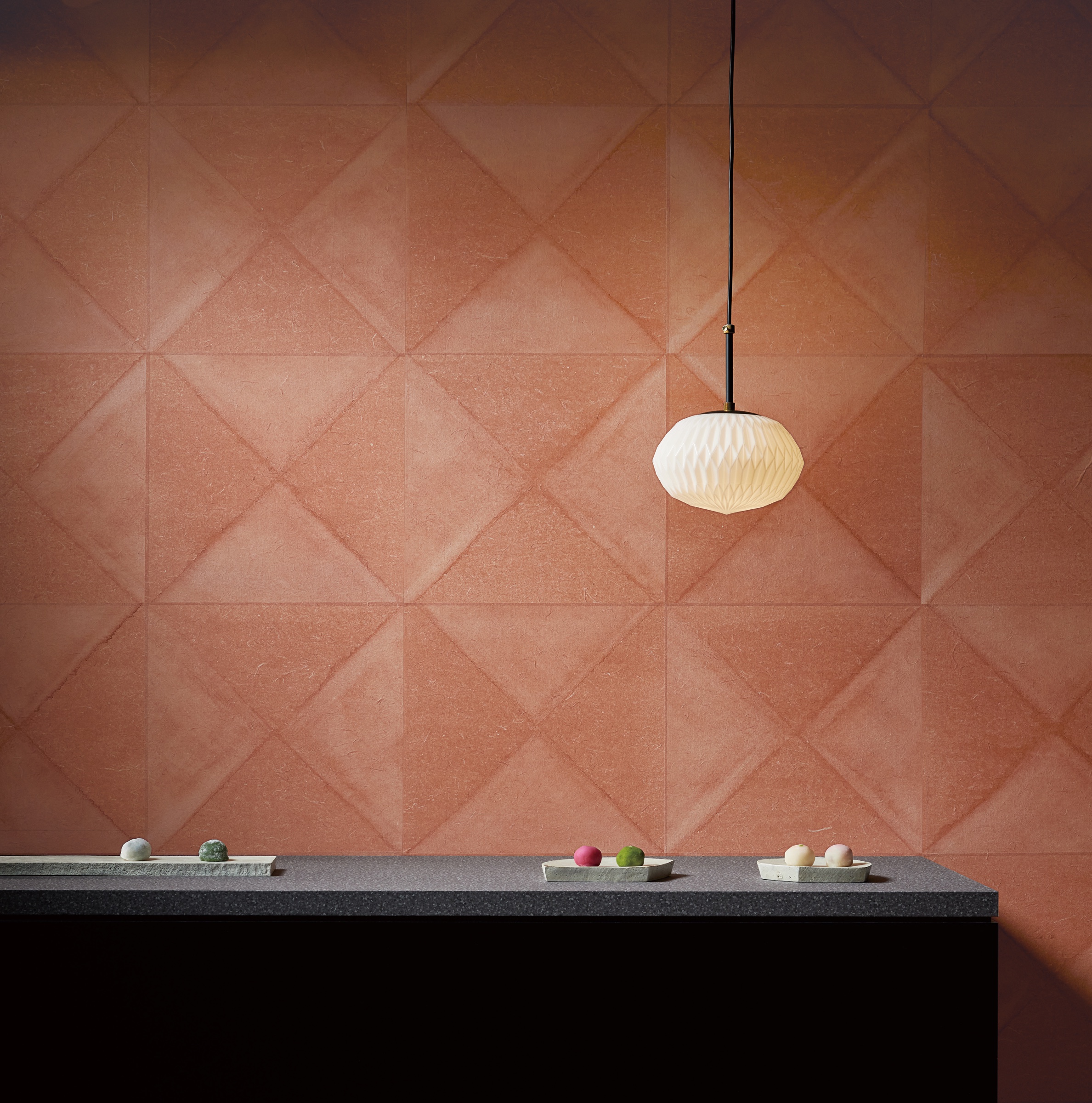
Shikigawara, paving tile, is one of the building traditions handed down from ancient times. Here the idea is redrawn for contemporary interiors. Each sheet is creased by hand, so the geometry keeps the warmth of handwork and lends a modern room character and charm.
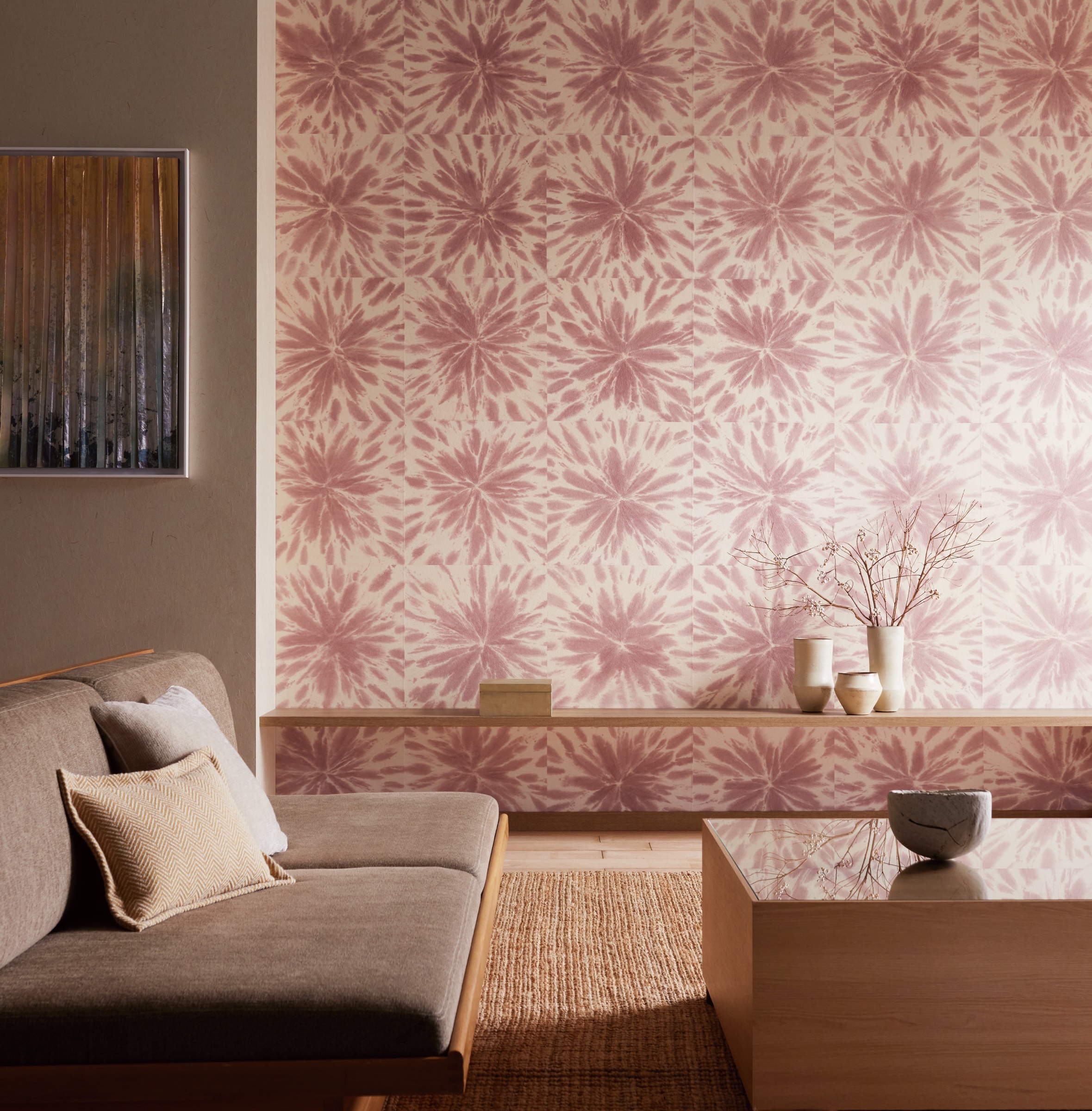
A pattern in the manner of sekka shibori, snowflake tie-dye, that reads as great flowers in bloom. Artisans gather each sheet of washi by hand and dye it with the brush, so no two patterns are the same. The texture of shibori and its quiet colours make for a graceful room with a gentle sense of happiness.
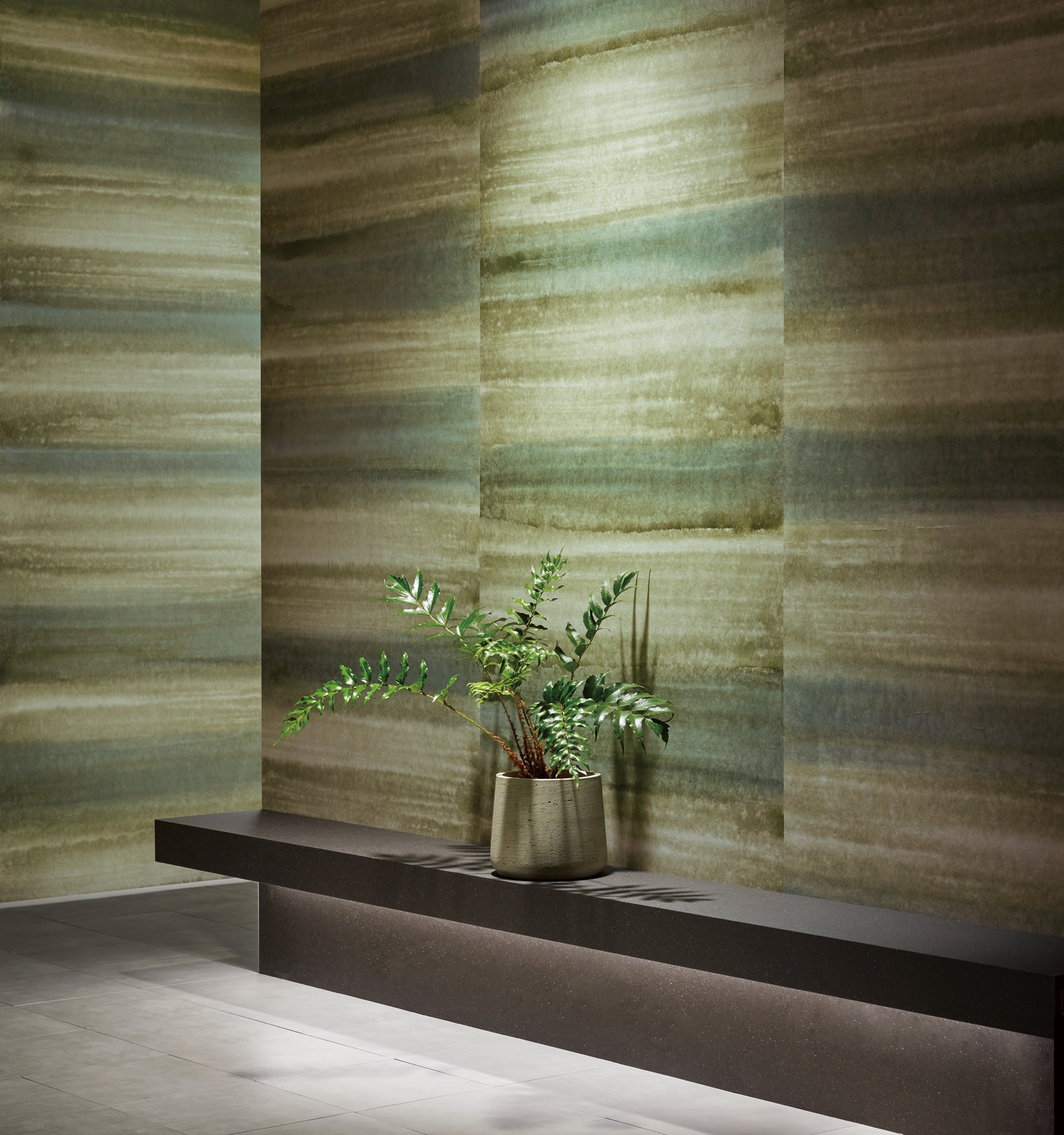
In the mountain-ringed home of Inshu washi, a dreamlike morning mist often settles over the land, changing its face as the sun climbs. Two artisans move their brushes across the sheet at the same moment to draw its gradations of light and dark, giving a room the feel of clear, clean air.
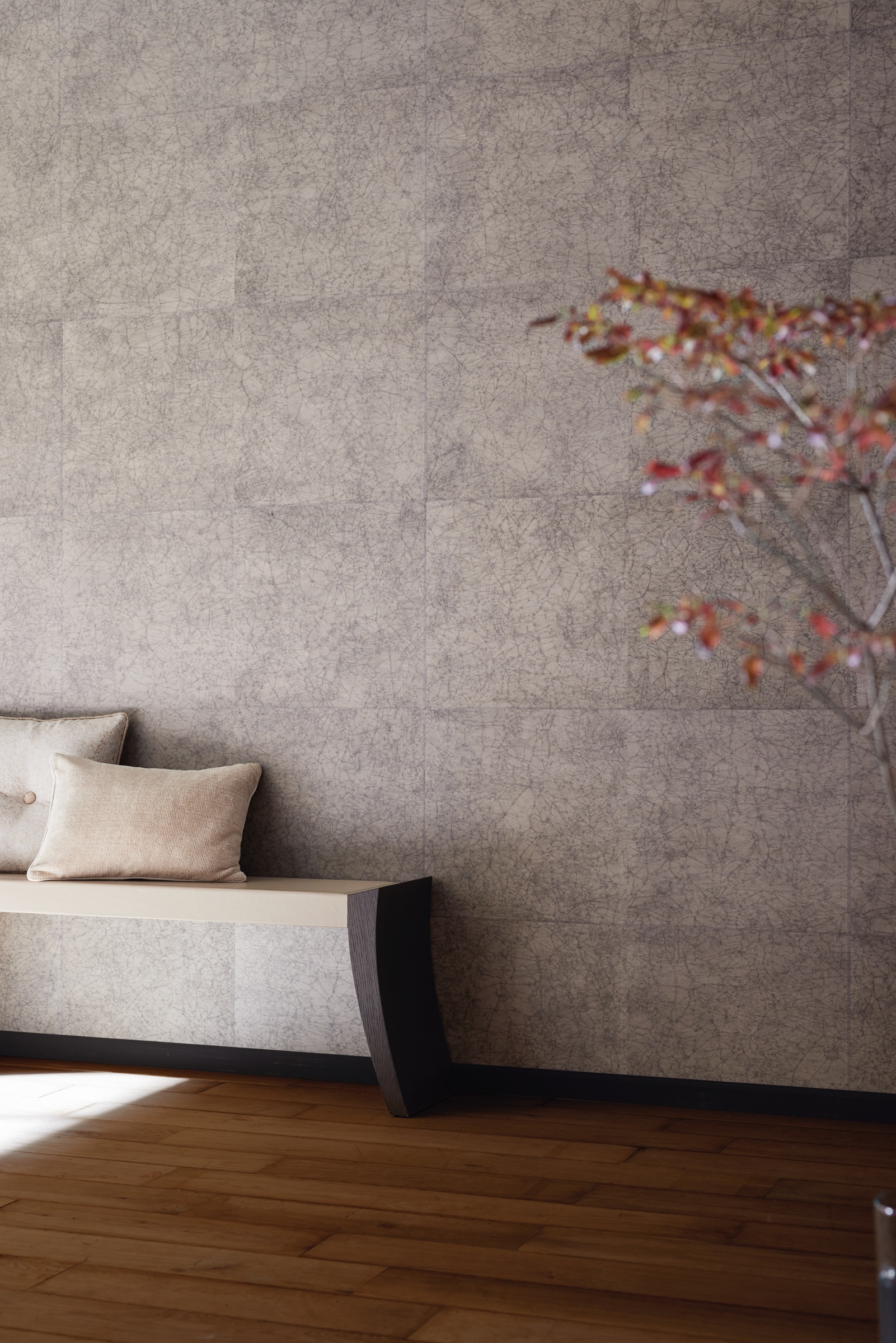
Artisans crumple each sheet of kozo washi carefully by hand, revealing the strength and warmth that lie in its fibres. The creases and colour diffuse the light softly and give the room a gentle, welcoming warmth.
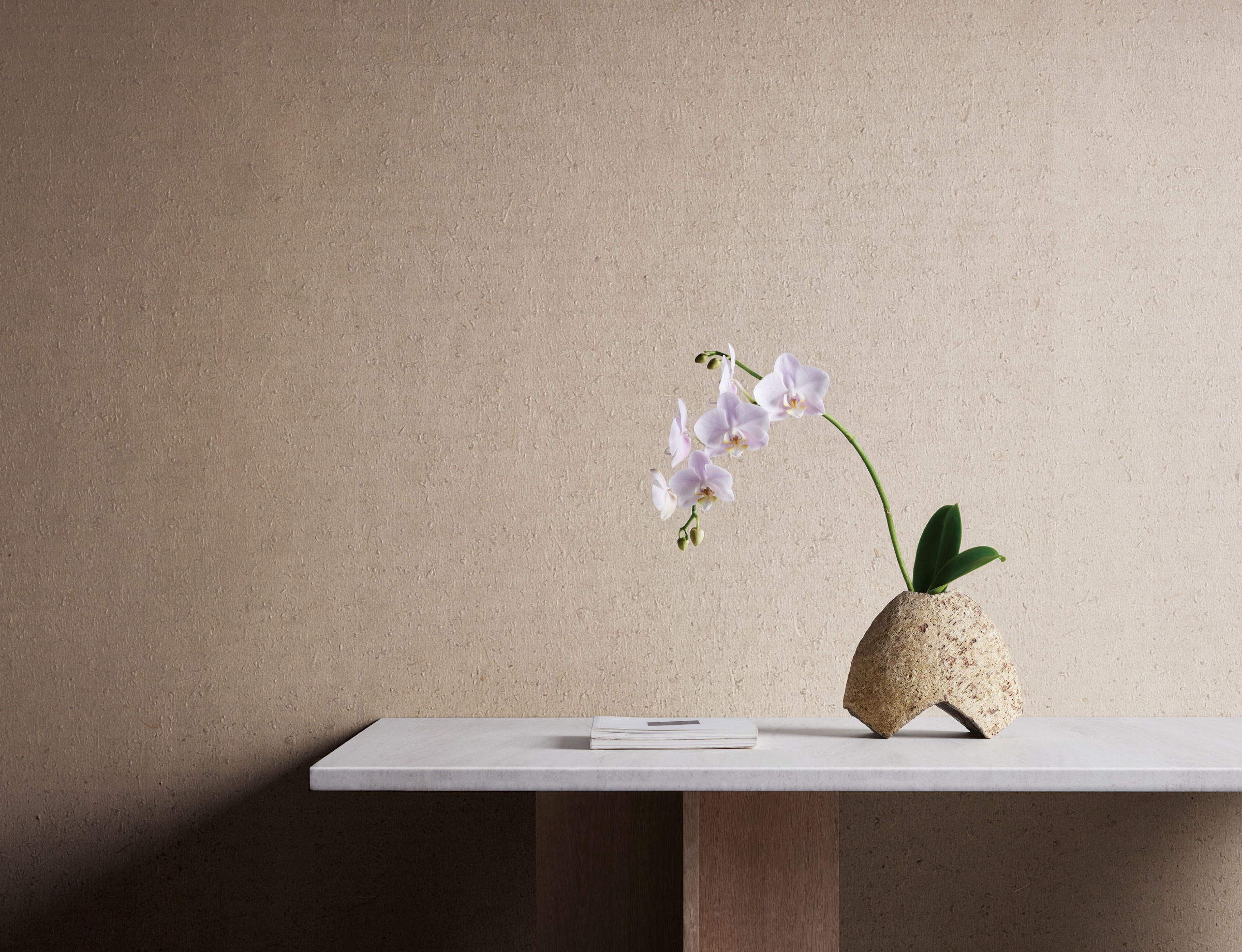
Kozo washi with particles of soil formed into the sheet. It carries the breath of nature and a sense of nostalgia, and the intricate texture the soil creates draws out the strength and warmth of the kozo, at once powerful and inviting.
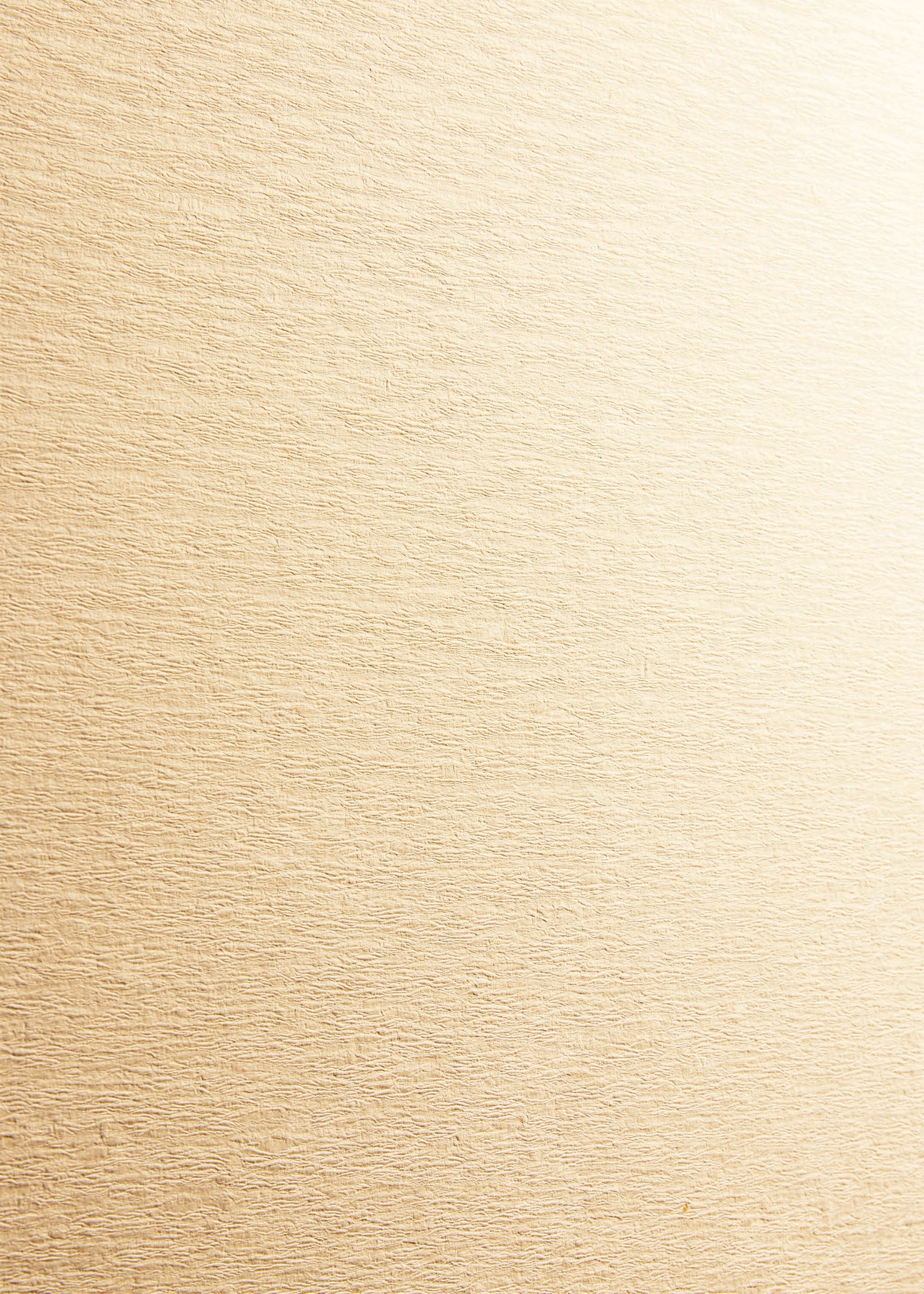
Dan shows the charm of washi through a light, textured surface. The sheet is made by layering the black bark of the kozo, then given a crepe-like wrinkle that casts soft shadows in the room.