
Kiri
Paulownia, sliced thin and laid by hand, so that the grain itself draws the pattern.
When paulownia is sliced, a soft and beautiful lustre appears on its surface.
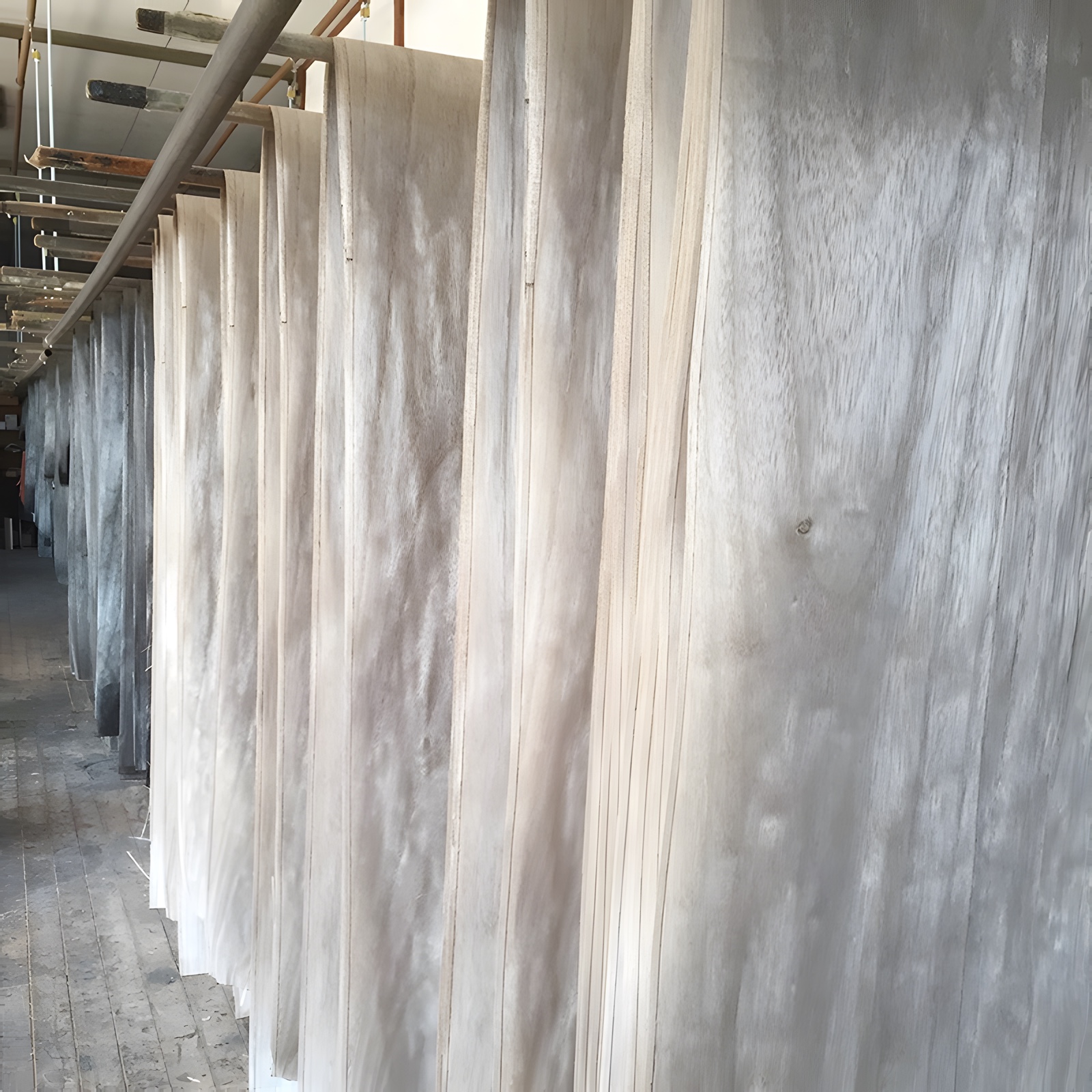
A wall made of wood grain
Sliced, paulownia shows a soft and beautiful lustre. Thin sheets are laid together one by one to make the most of the natural grain, whose direction gives the wall dimension and a natural play of shade.
Because every sheet is real wood, colour and grain vary from lot to lot. That variation is the character of the material, not a flaw in it.
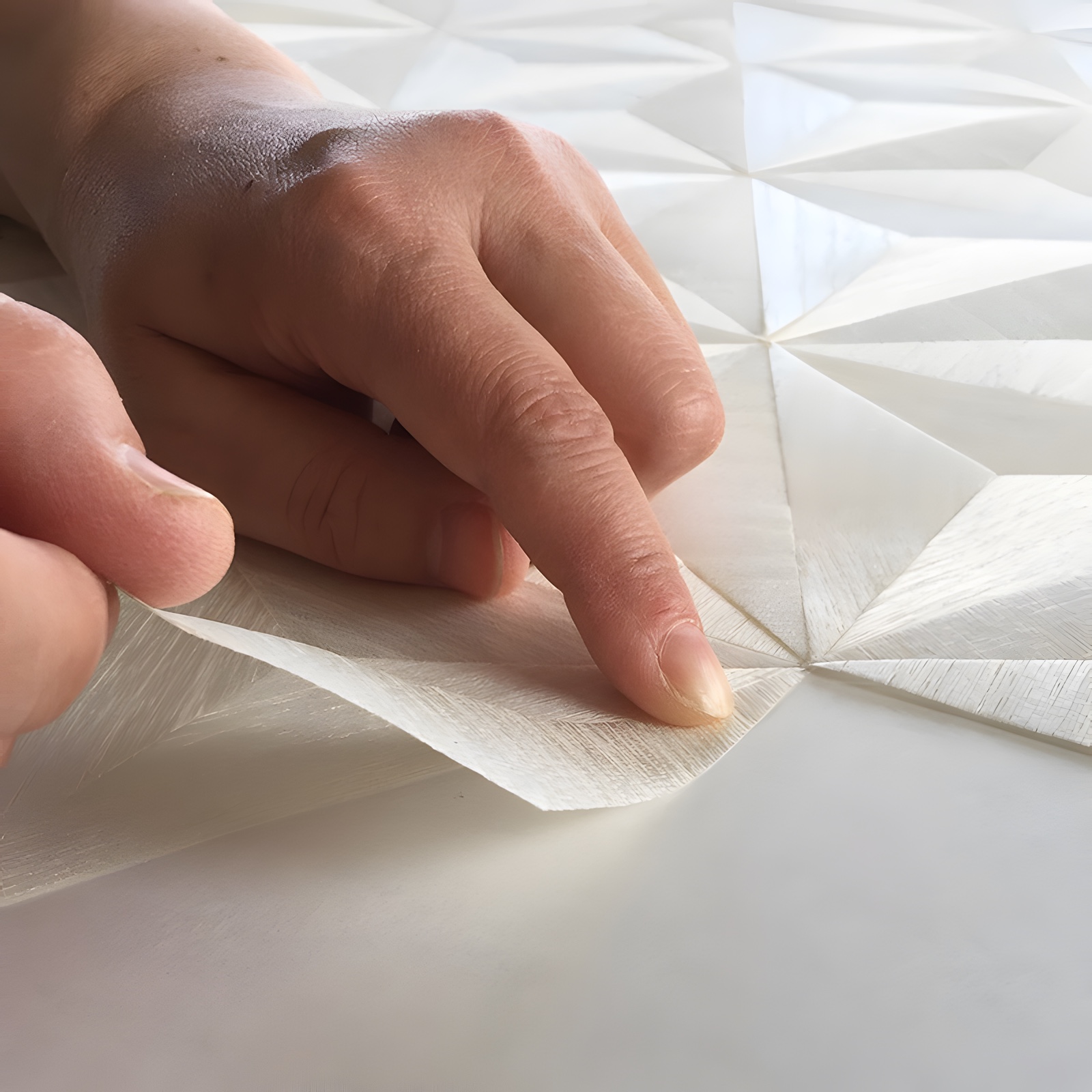
Light and dark change places
Kiri has a curious property: depending on the direction of the grain, the same wood reads light or dark. Turn one piece against another and the pattern appears without any change of colour.
Art Wall Legend II uses that property in five ways: a hemp-leaf pattern, a mosaic ray of light, layered frames, inlay, and parquetry in subtly different tones.
All of it is made by hand and to order, in about four weeks, and is rated non-combustible under the Japanese standard.
The kiri designs
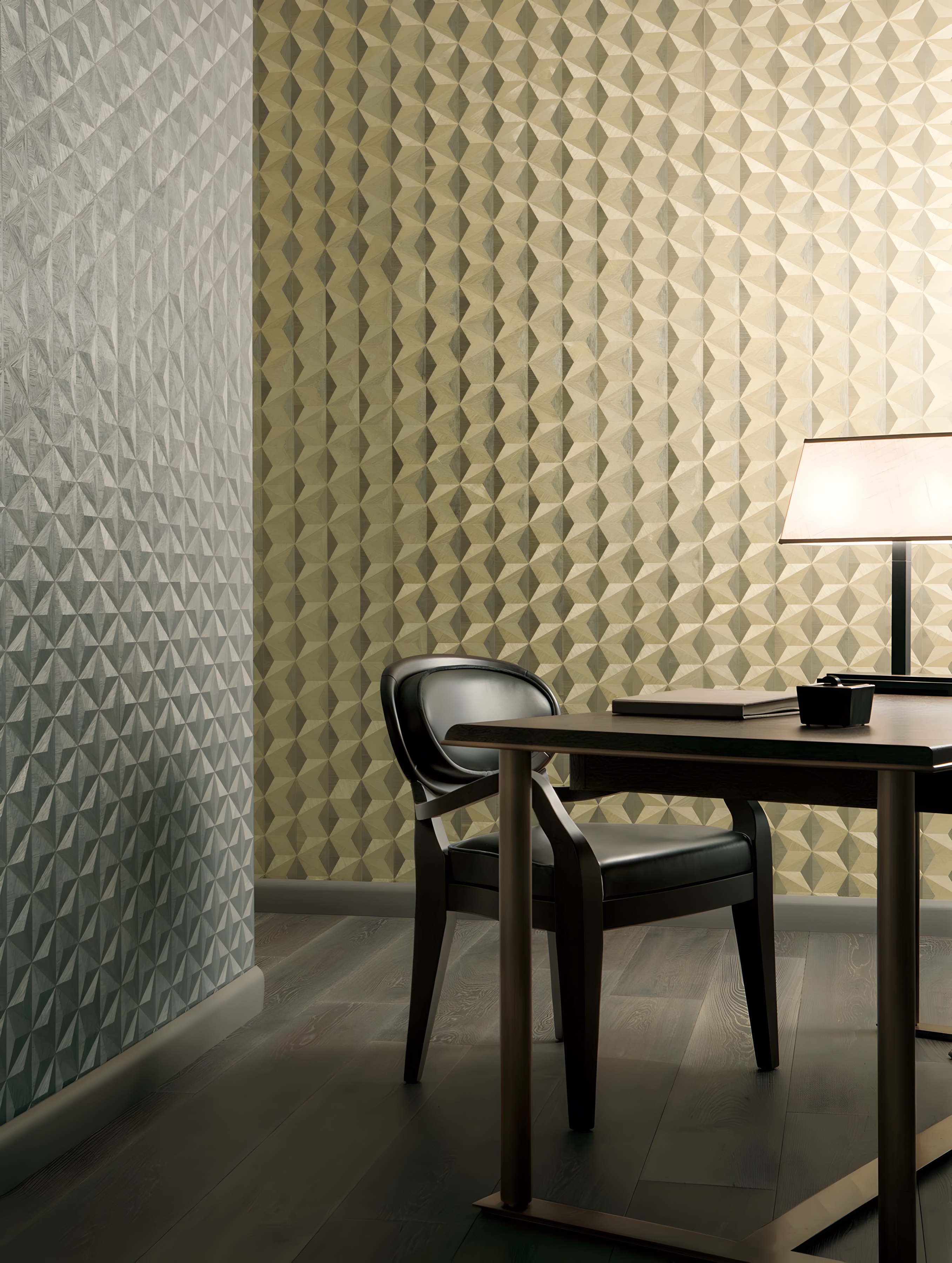
Asanoha, the hemp leaf, is a motif cherished in Japan since ancient times. Thin slices of kiri are laid one by one, and the changing direction of the grain gives the pattern a three-dimensional effect.
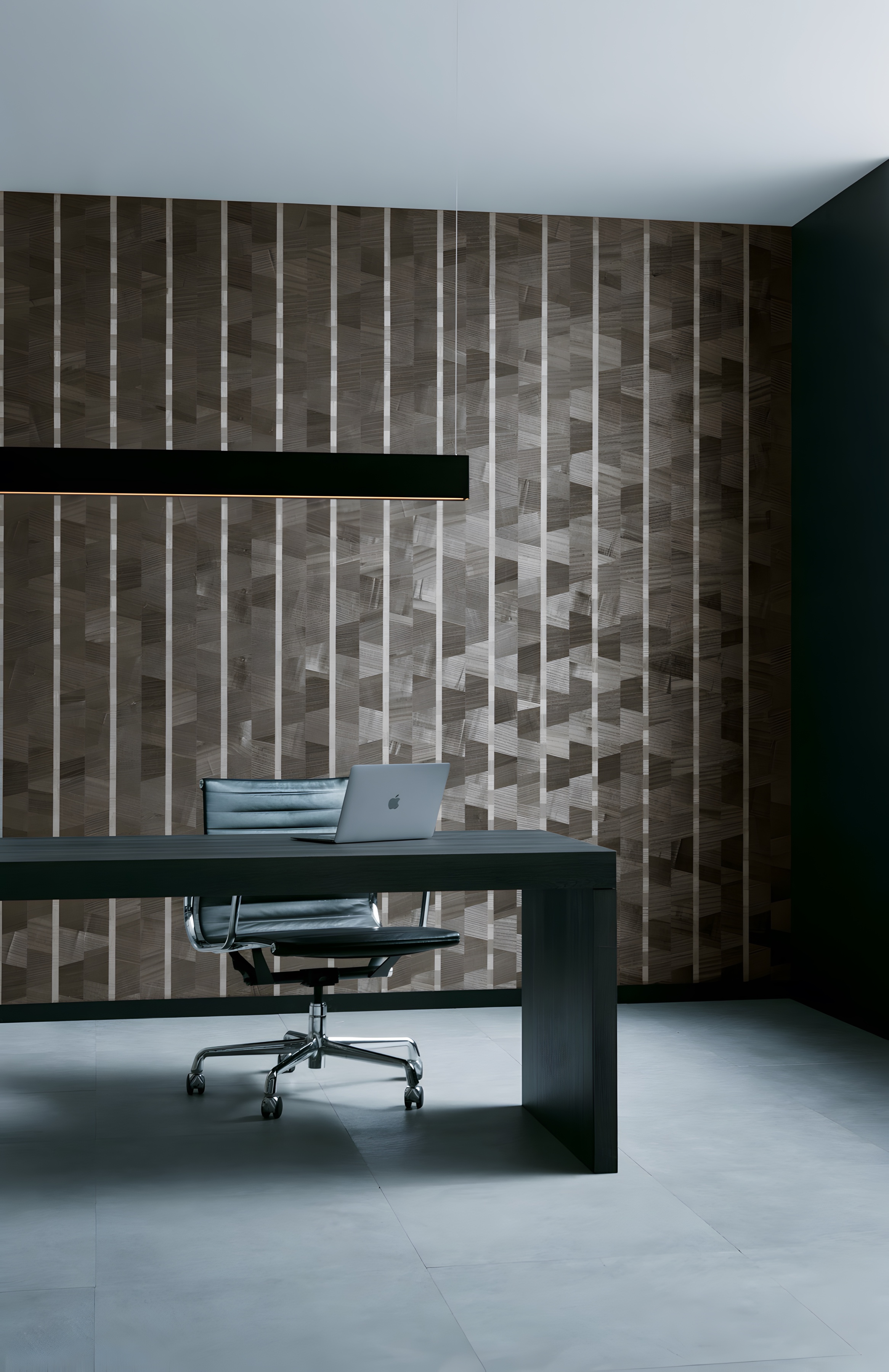
Pieces of beautifully lustrous kiri are inlaid like a mosaic, to draw a single ray of light passing across the wall.
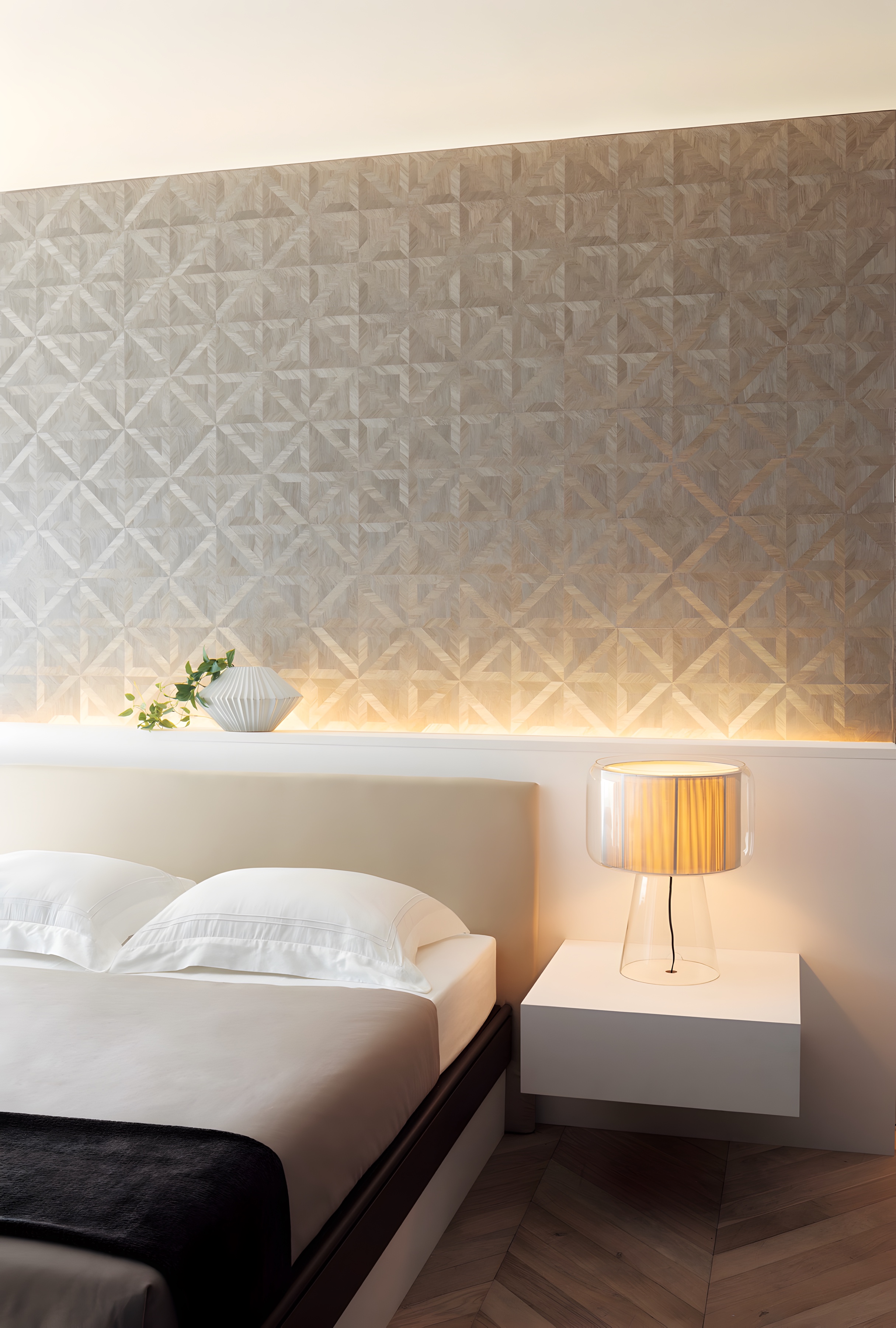
Rectangular frames laid one over another give real depth, and under light they shift into more complex shapes still.
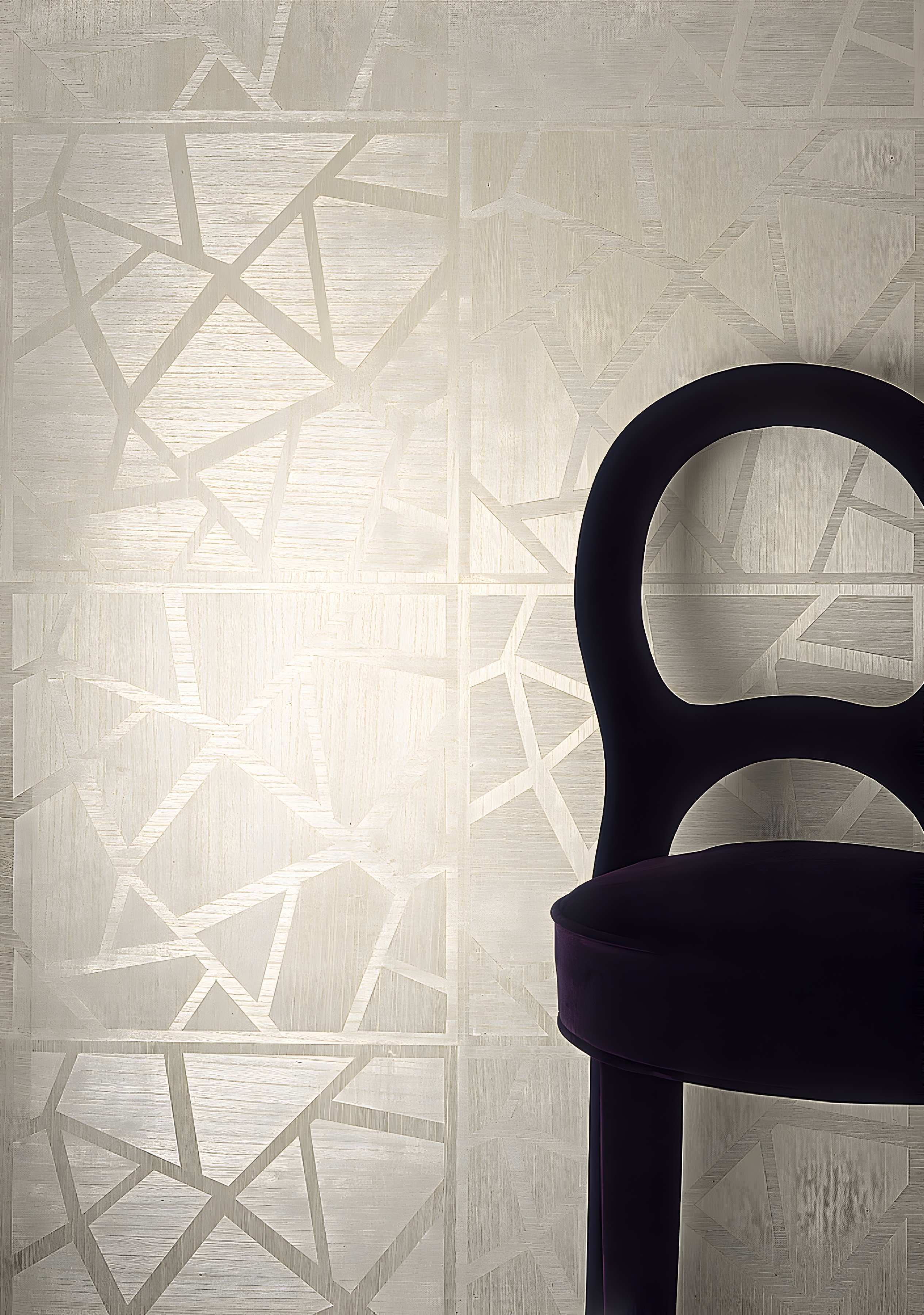
Zogan, inlay, plays on a curious property of kiri: depending on the direction of the grain, the dark and light areas appear to change places.
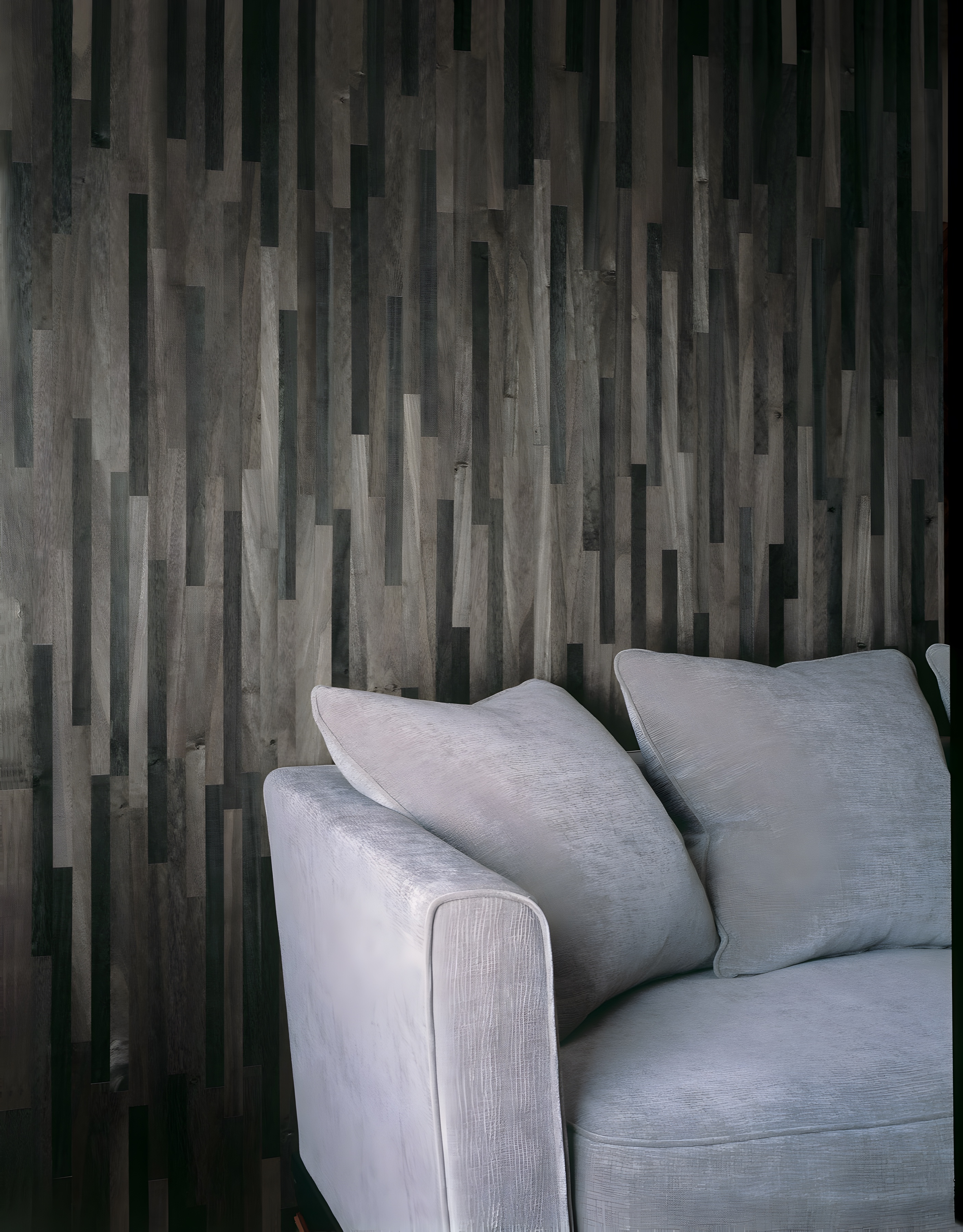
Kiri coloured in subtly different tones is chosen by eye, with an artist's sensibility, and brought together as yosegi: parquetry.